Off-grid solar, battery and generator systems
Off-grid solar & battery in Dorset
Solar, battery and generator systems for campsites, farms, events fields and rural sites where the grid is too far away or too expensive to reach. Often cheaper than the connection quote, and the power never drops.
Your quote in writing, before anyone visits. Set it beside your grid connection quote or your diesel bill.
 NAPIT
MCS and NAPIT certified
Registered installers (NAP-78112), so your system qualifies for export payments
RECC member
The consumer code for home renewables

Insurance-backed warranty
Our workmanship is covered even if we stopped trading
Insured to £2 million
Your roof and home are covered while we work
What off-grid solar is
Power from your own roof, stored in a battery, with a generator as the safety net
An off-grid system makes and stores its own electricity. Panels charge a battery bank through the day, and an off-grid inverter runs your site from it. There is no connection to the grid, so there is no export and no mains bill.
There are two ways to design one. With no generator, the panels and battery are oversized so a run of grey days can’t leave you short. Where a generator is already on site, an automatic transfer switch with an off-grid capable inverter, or a gateway, lets it take over when the battery gets low. That removes the need to oversize so much, and saves upfront cost.
Which route is cheaper depends on your site, and we’ll show you both.
Who off-grid solar suits
Sites where the grid is absent, far away or too expensive
We fit off-grid systems for campsites and glamping sites, farms, warehouses, events fields and anywhere else that needs electricity at an affordable price.
Campsites and glamping
Lighting, sockets and phone charging can run on around 5kW. Full hook-up for caravans needs more, depending on the number of plots. Seasonal sites need less oversizing.
Farms and barns
Buildings a long way from the nearest cable, where the connection can cost more than the system.
See solar for farmsEvents fields and venues
Cabins, workshops and field hook-ups with a varied load. We size from what you really use, not a template.
Workshops and warehouses
Sites that run on a diesel generator and want out of the fuel bill.
See commercial solarRural properties down a long drive
Semi-remote properties facing a connection quote that runs from £70,000 to £150,000, often with three-phase or around 60kW of throughput.
Sites running on diesel
If a generator is already there, we can measure its kWh to size the system, then add a transfer switch so it only runs as a backup.
Related pages
If your site is also commercial or agricultural
Off-grid is a design route, not a separate type of customer. These pages cover the rest of the picture.
Commercial Solar
Needs-sized, often zero-export solar for factories, warehouses and busy daytime sites, with a typical return around four years.
Find out moreSolar for Farms
Solar for your farm's own power, with barn roofs, ground-mount and the off-grid route when the connection is too dear.
Find out more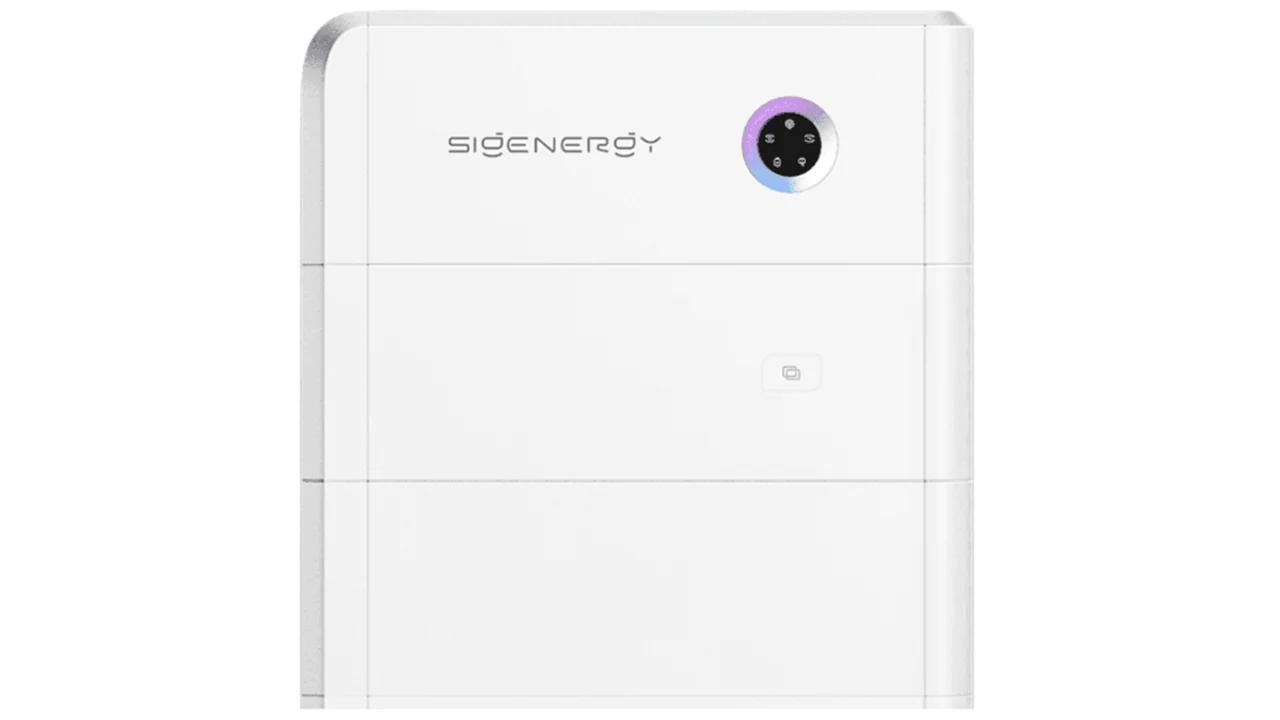
Battery Storage
Modular batteries you can add to later, and the gateway that lets a generator take over smoothly.
Find out more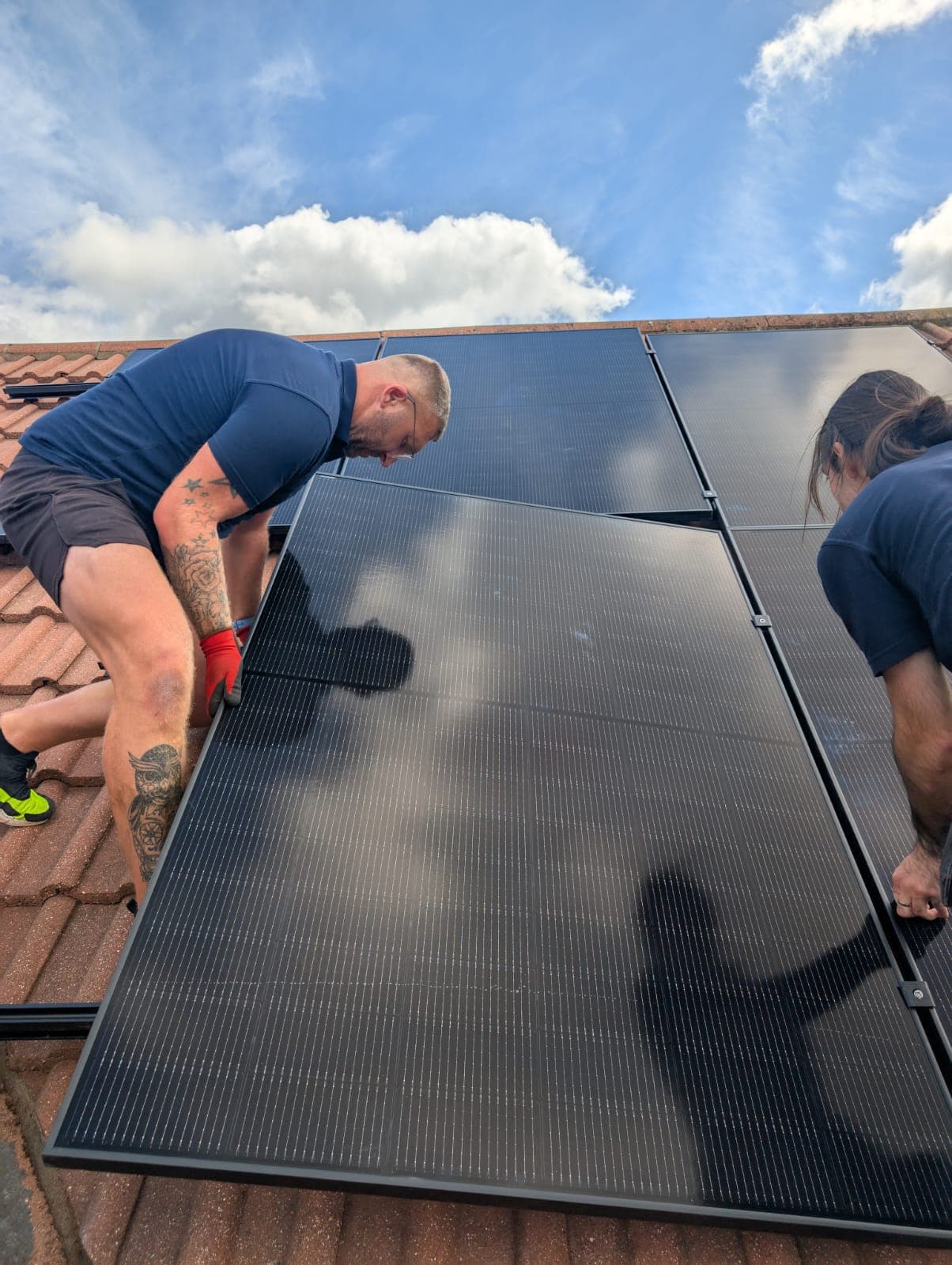
Why choose New Gen for off-grid
One installer for the panels, the batteries and the generator link
A system the whole site depends on needs the design, the inverters and the generator integration to be thought through together. Both founders came from technical support, procurement and commercial project management at another solar company, and off-grid is a specialism of ours.
- We tell you if the grid is betterIf a cheap connection is close by, grid-tied solar and battery is usually the better call. We’ll say so.
- Sized from what you really useWhere you have a generator we measure its kWh, then oversize slightly. No template kits.
- Accredited, insured, independently coveredMCS and NAPIT certified (NAP-78112), RECC members, insured to £2 million, with insurance-backed workmanship cover.
- A real job to point toA 54kW off-grid system with a 62kWh battery, on a site that had been running on diesel.
Customer reviews
What customers say about working with New Gen

We have been researching the whole solar installation for a while, having had numerous conversations with some of the national companies who seemed to be pushing very hard, we eventually found New Gen Renewables and are pleased we did. Our installation was completed last week, Phil and his team at NGR have held our hand through the entire project, the guys installing the panels, the electrician connecting us have done a great job. Communication has been great, we have now received all our warranties & insurance docs. The cost of solar is a significant amount, the nuances of the solar business can be taxing & complex, we are pleased we put our faith in Phil and his team, and yes, the price was to our liking.
Posted on Google

Really good experience with New Gen Renewables from start to finish. Had solar panels fitted and the lads were spot on- turned up on time, worked hard, and got everything done to a high standard. Easy to deal with, no messing about, and explained everything properly without trying to oversell anything. Really happy with the install and would definitely recommend them to anyone looking at getting solar panels fitted.
Posted on Google
I had a 3.5kw solar installation in February 2025, we are extremely satisfied with the system that was recommended by New Gen. The installation was completed within a day, the team were professional and courteous when they came round to fit the job. My neighbour saw the work that I’ve had done and has gone and done it too. I would recommend this service to anyone that’s interested in renewable energy & solar advice.
Posted on Google
- Your yearly usage
- from your bill (kWh)
- System designed for you
- sized to your usage
- Your free quote
- £ ______
- Estimated monthly saving
- £ ______
- Payback period
- __ years
Estimates for your home, never promises. Illustration only.
Free, in writing, no obligation
Your Solar Savings Report and quote for an off-grid site
You shouldn’t have to commit to a site visit to find out whether off-grid beats the connection quote you’ve been given. Tell us about your site and how you power it today, and we put the numbers in writing first.
- The system we’d design for youPanels, battery bank and, where it makes sense, a generator link, sized to your site.
- Your free quoteWhat that system costs, so you can set it beside your grid connection quote. A free survey confirms it if you go ahead.
- Your savingsWorked out from your usage, against your diesel or your connection. An estimate for your site, never a promise.
- Your payback periodWorked out for your own site, so you can judge the return.
Why sites go off-grid
What the figures look like when the grid is the expensive option
Three numbers from real quotes and a real job.
Grid connection quotes
£70k to £150k+seen for semi-remote sitesLong driveways, three-phase supplies and around 60kW of throughput push the price up. You would still pay for every unit once connected.
The off-grid alternative
About £70kfor the Max Events system, against £150k+Solar, battery and a transfer switch to the existing diesel generator, sized for their load. Almost always off-grid is cheaper than or equal to a connection.
Diesel you stop buying
Over £1mprojected over the system’s lifeThe customer’s own calculation of the diesel they would otherwise burn. A projection, not a promise, and yours will depend on your site.
Max Events is one real job. Your figures depend on your site, and your quote works them out.
Cost against a grid connection
Often cheaper than a grid connection, and here is the maths
What a grid connection can cost
Quotes we have seen for semi-remote sites down long driveways, needing three-phase or around 60kW at any one time. You still pay for every unit used.
What off-grid costs
Completely dependent on your requirements. A campsite’s basics need around 5kW. Full hook-up for caravans, or a site with electric heating, needs a lot more.
How you pay
A 25% deposit, 35% when practical work starts and 40% on completion.
We don’t publish a headline off-grid price, because a campsite and a full events field are nothing alike. We won’t borrow a home solar price either, because that is a grid-tied system. For a grid-tied home, see our solar panels page.
Max Events: the connection quote against what we built
One real job, not a price list. Illustrative and never guaranteed.
Get my own off-grid quoteSee your monthly savings and years to paybackA real off-grid job
Max Events, Dorchester: a diesel-powered site that now runs on solar
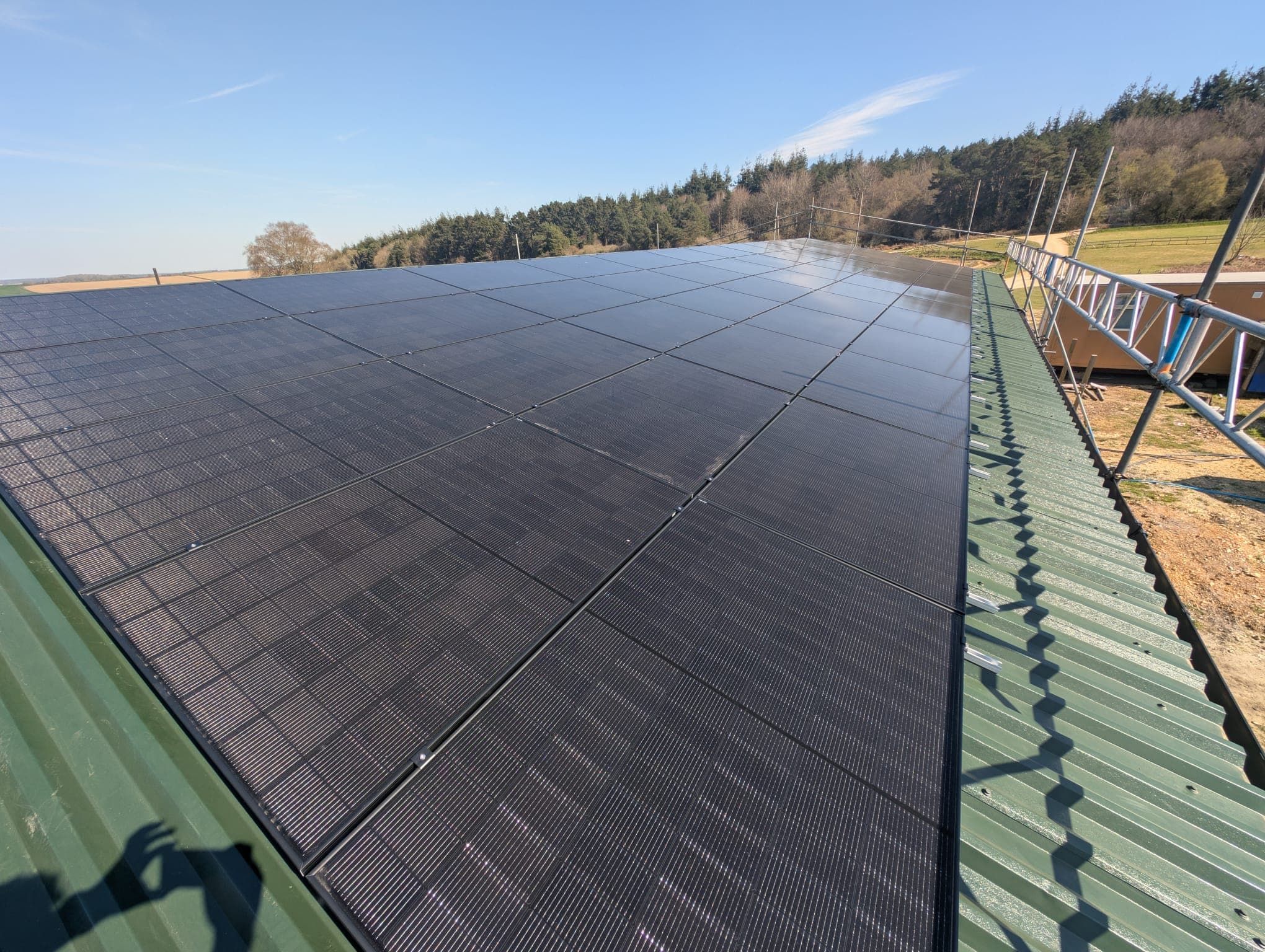
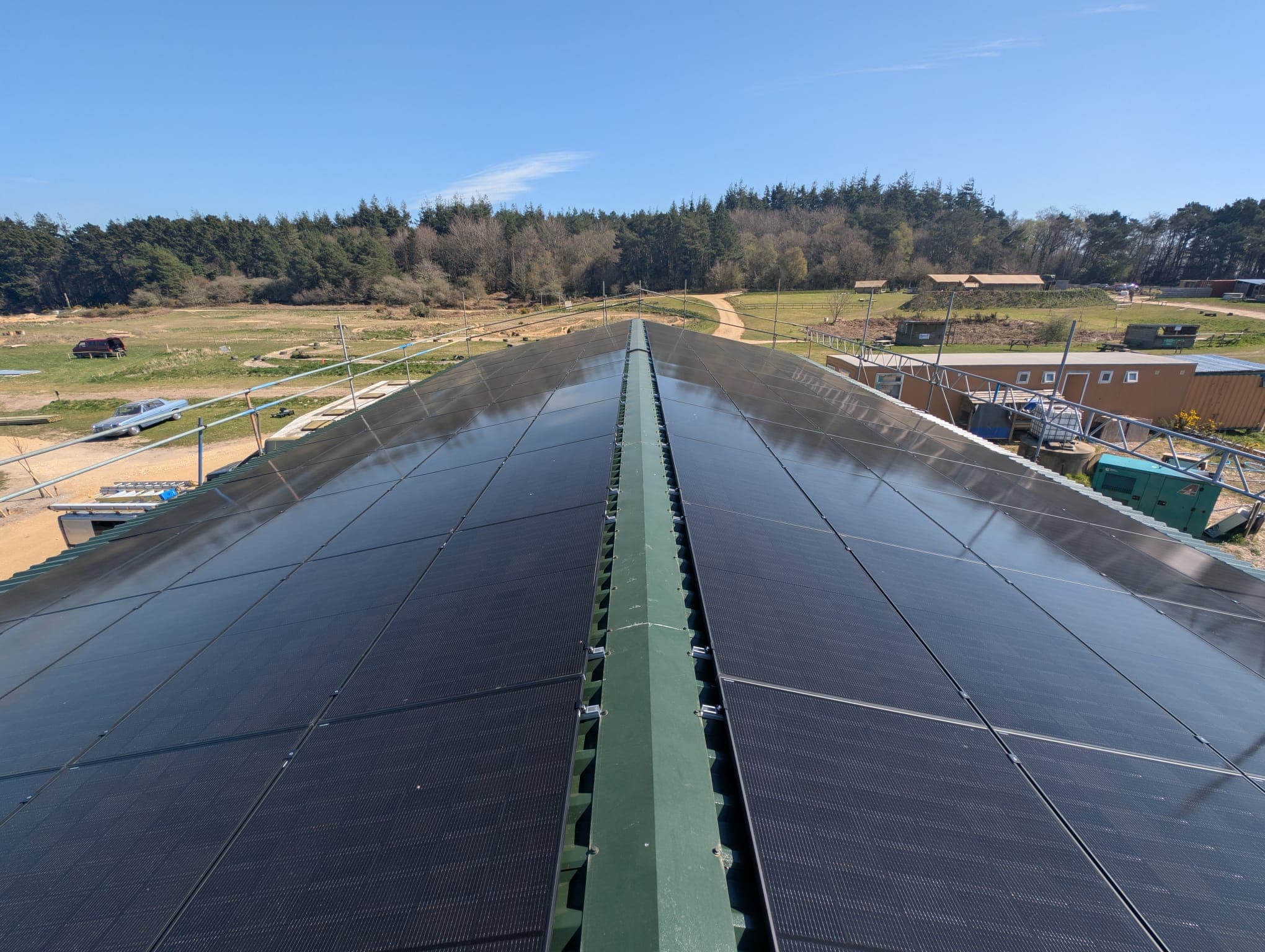
Max Events runs a workshop, an extra-curricular school facility, cabins and a safari-tent glamping field with electric heating and hook-up. It had been kept going on a diesel generator, and a grid connection had been priced and ruled out as too expensive.
The generator and inverters are set to start at 12% battery, sync, and by 10% the transfer switch hands the site to the generator and tops the batteries up, so the power never goes off. All the roof work took three days. A second barn is planned, and the racks have room for it.
Read the Max Events case study →How to decide
Off-grid or connect to the grid? How to decide
We’ll tell you straight. If mains is cheap and close, connect.
| What to compare | Pay for a grid connection | Go off-grid with solar and battery |
|---|---|---|
| Upfront cost | £70k to £150k+ quoted for semi-remote sites | Sized to your load. Almost always cheaper than or equal to the connection |
| Running cost | You still pay for every unit you use | The sun is free. A generator only runs as a backup, if you have one |
| Export income | Possible, if you also fit grid-tied solar | None. The saving outweighs what you give up |
| Power cuts | You depend on the network | Your own supply, with the generator behind it if you want one |
| Best when | A connection is cheap and close, where grid-tied solar and battery is usually the better call | Mains is absent, or the quote is huge, or you are paying for diesel already |
If you have mains and want to cut your bills, solar panels and battery storage are the page you want.
Warranties and cover
What to ask any installer before you rely on them for your power
A site that depends on one system needs cover that doesn’t depend on one company.
| What to compare | New Gen Renewables | A cut-price fit |
|---|---|---|
| Workmanship cover | 2-year insurance-backed (IWA), independent of us | Company-backed only |
| Cover if the installer folds | Stands even if we stopped trading | Gone with the company |
| System sizing | From your measured usage or generator kWh | Often a template kit |
| Panels | 25-year product, 30-year performance | Varies, often shorter |
| Inverters and batteries | Nothing under a 10-year warranty | Often whatever's cheapest |
| Faults after install | No call-out fee for anything outside your control, visits within 5 working days if not an emergency | Call-out charges vary |
| Like-for-like comparison | We'll quote the identical system so you can compare | No Not offered |
The worries people have about off-grid
Will it keep the lights on, and what about winter?
What if the batteries run out?
A generator that starts itself, and a switch that hands over without a blip
On the Max Events system the generator and inverters are set to start when the battery reaches 12%. They sync, and by 10% the transfer switch moves the site onto the generator, which also tops up the batteries. The power never goes off, and the batteries are never fully drained, which protects their life.
What about a grey week in January?
Oversize it, or add the generator. Either works, and we cost both
With no generator, we oversize the panels and the battery. Extra panels cover dull summer days and short winter ones, and extra battery works as a buffer so a bad day draws on what was stored the day before. Where there's a generator already, a transfer switch and an off-grid capable inverter (or a gateway) means you don't have to oversize so much, which saves upfront cost.
Am I giving up money by not exporting?
Yes, and it is far outweighed by what you stop paying
An off-grid system can't export, so you lose that income. But what you save by switching away from diesel, or by not paying for a grid connection at all, is far larger. That is why Max Events moved, and why the customer projects over £1m of diesel saved. If you do have mains and want export income, grid-tied solar is the right system.
How an off-grid job runs
From first call to a site that runs on its own power
The same steps as any of our installs, with extra care at the start to get the size right.
Before you decide anything
- 1
Tell us about your site
A few quick questions, about two minutes. Or just give us a call.
- 2
A quick call from Phil or Jake
To talk through what you run, whether there is a generator on site, and what the grid connection quote was. No sales pitch, no pressure.
- 3
Your report and quote, in writing
The system we would design and what it costs, so you can set it beside your grid quote or your diesel bill. Take your time, and compare other quotes.
- 4
A free survey, if you’re happy
We look at the site and confirm the quote. No pressure to decide on the day.
Once you've said yes
- 5
Deposit and scheduling
A 25% deposit books your install. We confirm the timing in your quote, because off-grid kit and site access vary.
- 6
Install, with roof work in days
On the Max Events job, all the roof work was done in three days. Racks go in with room to expand.
- 7
Handover and monitoring
We show you how the system performs and how the transfer switch behaves, so there are no surprises.
What goes into a proper off-grid system
The kit, and how big it needs to be for your kind of site
Panels, oversized where it pays
Oversizing protects you from low generation on cloudy summer days and short winter ones. Max Events has 120 DMEGC 450W panels.
Off-grid capable inverters
Built to run a site on its own, not to export. Max Events runs two Sunsynk 30kW inverters for their off-grid function.
About SunsynkA battery bank that can grow
High-voltage batteries in expandable racks. Add more as the site grows, rather than overbuying on day one.
See battery storageGenerator and transfer switch
The generator starts itself at 12% battery and the switch hands over by 10%. Seamless, so the power never goes off.
Sized from your generator
Where you run a generator, we measure its kWh to size the system, then oversize slightly to cover the whole year.
Monitoring
You can see how the system performs. Because it is off-grid, we can only read the generation from the panels.
Where we work
Off-grid solar across Dorset and the BCP area
Based at Merley House, Broadstone. Off-grid sites are rarely in a town centre, so tell us where yours is and we will take it from there.
Questions
Off-grid solar: cost, size, winter and the law
How much does an off-grid solar system cost, and is it cheaper than a grid connection?
The cost depends entirely on what your site needs, so there is no honest one-size figure. The comparison that matters is the connection quote. We've seen grid connection quotes of £70,000 to £150,000 for semi-remote sites down long driveways that need three-phase or around 60kW at any one time. Almost always solar and battery is cheaper than or equal to that, and where it isn't, the savings over the next few years outweigh the connection cost. Our Max Events job replaced a quote of £150,000+ with a system of around £70,000.
What size off-grid system do I need?
It depends on what you run. A campsite may only need around 5kW for basics like lighting, sockets and phone charging. If you offer full electric hook-up for caravans, you need a more extensive system, depending on the number of plots. If you already run a diesel generator, we can measure the kWh it produces to work out the size, then oversize slightly to cover the whole year. Seasonal sites need less oversizing, because they draw less in the colder months.
Is 5kW enough to run a house off-grid?
There's no rule of thumb that holds for every house. What matters is how much you use each day in the worst week of winter, not the size of the panels on paper. A campsite's basics can run on around 5kW. A house with electric heating, cooking or an EV needs far more, and winter sets the limit rather than summer. We size it from your real usage, or from the kWh your generator produces today.
Will it keep the power on all year, through a grey winter?
Yes, if it is designed for it. With no generator, we oversize the panels and battery so that cloudy summer days and short winter ones don't leave you short, and extra battery acts as a buffer after a bad day. With a generator, an automatic transfer switch hands over when the battery gets low. On our Max Events system the generator starts at 12% battery, syncs with the inverters, and the switch hands over by 10%, so the power never goes off.
Do I need a generator as well?
Not always. If you use solar and battery alone, you need to oversize both. Where a generator is already on site we would always recommend an automatic transfer switch with an off-grid capable inverter, or a gateway. That takes away the need to oversize so much, which saves upfront cost, and it is more cost-effective over the system's life if the generator is only rarely used.
Is it legal to live off-grid in the UK?
Yes, living off-grid is legal in the UK. Depending on your project, building regulations and planning permission may still apply, for example for a new building or a ground-mounted array. We flag anything relevant at your assessment, and your local council can confirm the planning side.
Is off-grid right for my property, or should I connect to the grid?
If a cheap grid connection is available, grid-tied solar and battery is usually the better call, and we'll say so. Off-grid earns its keep where mains is absent or the quote is huge, and where you would still pay for every unit once connected. We'd rather give you the honest answer than fit a system you don't need.
Can I earn money from export with an off-grid system?
No, an off-grid system has no export. The saving from switching away from diesel, or from not paying for a grid connection, far outweighs the income you give up. If you do have mains and want to earn from export, you want a grid-tied system, and our solar panels page covers that.
Can I add to an off-grid system later?
Usually, yes. Our batteries sit in expandable racks, so more can be added as your needs grow. The racks on our Max Events system were built with room to expand, and a second barn is already planned. It is one reason we suggest you don't overbuy on day one.
What goes wrong with off-grid systems, and how do you avoid it?
The usual problems are undersizing for winter, and running the battery flat, which shortens its life. We size from your measured usage and oversize where it is cost-effective. On generator-backed systems we set the generator to start at 12% battery so the batteries are never fully drained. We also show you at handover how the system and the transfer switch behave, so there are no surprises.
Why should I trust New Gen with a system the whole site depends on?
We designed and installed a 54kW off-grid system with a 62kWh battery for Max Events, and we've installed and managed more than 1.2MW of commercial solar. We're MCS and NAPIT certified (NAP-78112), RECC members, our workmanship is covered by an insurance-backed warranty (IWA), and we're insured to £2 million. We'll also tell you if a grid connection is the better choice.
Thinking off-grid? Get your quote in writing first
No push for a sale on the day, and you're welcome to compare us with other quotes, including a grid connection. Or just call and talk it through.