Farm solar across Dorset
Solar panels for farms in Dorset
Solar for your farm's own power: barn roofs, ground-mount and off-grid sites, sized to your load, with real farm-scale numbers and an off-grid specialism most solar firms don't offer.
Your quote and your payback, in writing, before anyone visits.
 NAPIT
MCS and NAPIT certified
Registered installers (NAP-78112), so your system qualifies for export payments
RECC member
The consumer code for home renewables

Insurance-backed warranty
Our workmanship is covered even if we stopped trading
Insured to £2 million
Your roof and home are covered while we work
Let's be clear from the start
Solar for your farm's own power, not a solar-farm land lease
If you searched "solar panels for farms", you may have landed on pages about leasing your land to a developer. That's not what we do.
We design and install solar, battery and off-grid systems that make power for your farm to use. That cuts the cost of running machinery, refrigeration and buildings, or replaces an eye-watering grid-connection quote altogether.
The commercial side of our business is a larger, needs-sized version of what we do for homes. See our commercial solar page
Why farms make good solar sites
Where a farm's electricity goes, and what solar can take on
Many farm loads run in daylight, which is when solar generates. That is why farms are among the better commercial fits.
Refrigeration and cooling
Cold stores and milk cooling run all day, and often all night. Solar covers the daytime and a battery can carry on into the evening.
Drying, ventilation and processing
Grain driers, fans and packing sheds use a lot of power in short bursts. Sizing the system to this load matters more than headline kW.
Workshops, machinery and charging
Workshops, welders and tools, and increasingly farm vehicles and chargers, all add daytime demand.
Barn and outbuilding roofs
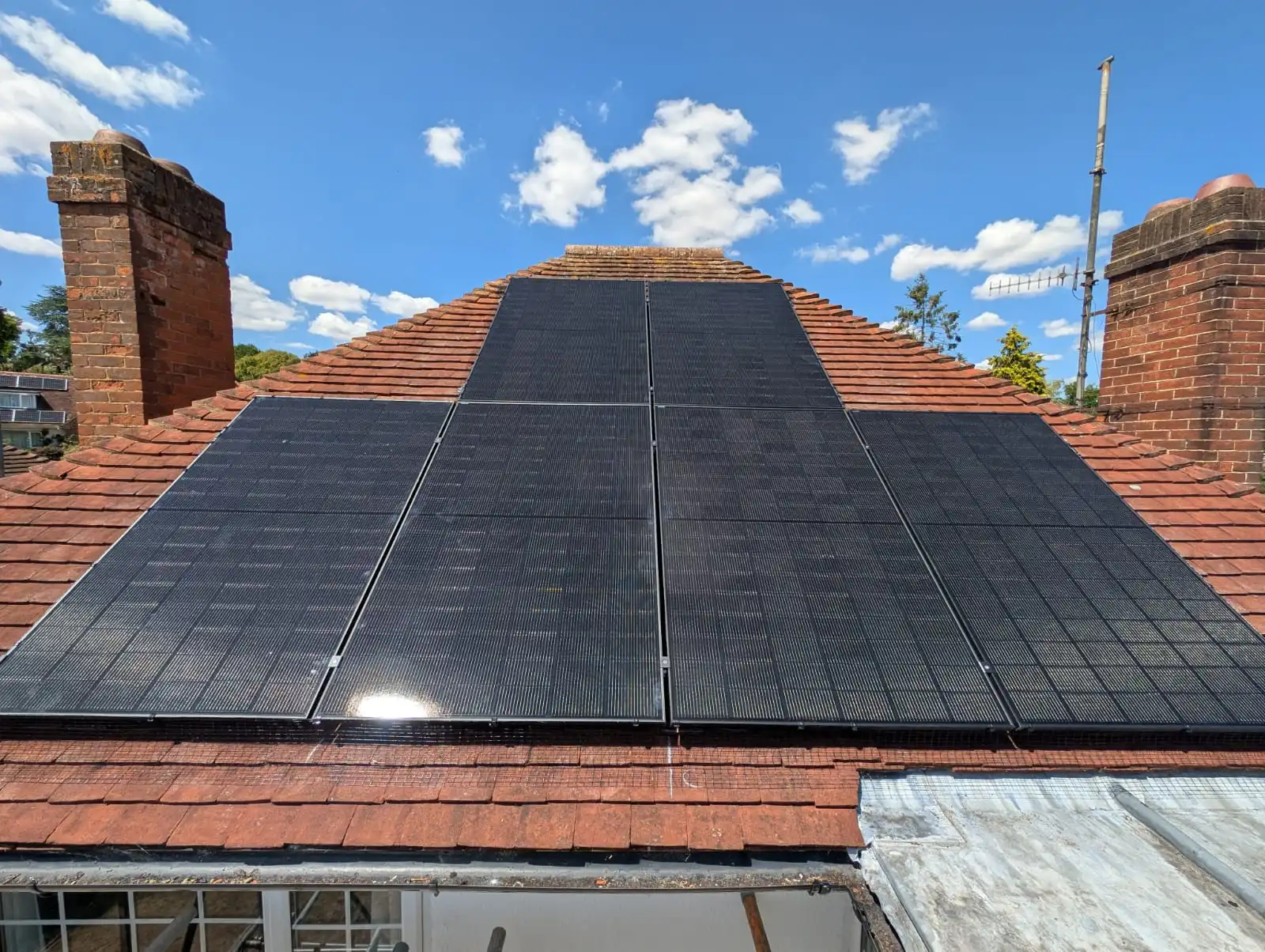
Large, often unshaded roofs that are simple to survey. Trapezoidal roofs are the safest and cheapest to fit.
Diesel generators
If a generator is running a site, its fuel use tells us what the load is. It is how we size an off-grid system.
Remote fields and sites
Where the grid is far away or the connection quote is huge, solar, battery and a generator can be cheaper and keep the power on.
Is it right for your farm?
Which farms solar suits, and which it doesn't
It suits you if
- You use a lot of electricity in the daytime, for cooling, drying, ventilation, processing or workshops.
- You have a large, mostly clear barn or outbuilding roof, or spare ground.
- A generator runs part of the site, or a grid connection quote is out of proportion.
- You want to cut running costs and be less exposed to price rises.
It's probably not for you if
- You want to lease your land to a solar developer. That is a different business and we are not it.
- Most of your power use is at night, with no plan for a battery. Solar won't earn its keep on its own.
- Your roof is an older fibre-cement sheet. These need a proper inspection first, and some contain asbestos. We will tell you if ground-mount makes more sense.
- Your site is heavily shaded, or your use is very low. The sums have to work, and we will say if they do not.
How to choose
Barn roof, ground-mount or off-grid: which suits your site
| Compare | Barn or outbuilding roof | Ground-mount | Off-grid |
|---|---|---|---|
| Best when | You have a large, sound roof and a daytime load | The roof is poor or too small and you have spare land | No grid, or a very expensive connection |
| Planning | Often simpler. We confirm at survey | Usually needs permission, around 2 to 4 months | Depends on the structures. We confirm at survey |
| Roof or ground | Trapezoidal is the safest and cheapest. Fibre-cement needs care | Needs space, groundworks and cabling | Panels on roofs or on the ground, plus a battery bank |
| Battery | Optional, sized to your load | Optional, sized to your load | Essential, often with a generator backup |
| Export to the grid | Often zero-export, sized for your own use | Often zero-export, sized for your own use | None |
Off-grid is a specialism of ours. See our off-grid solar page for how those systems are designed.
What farm solar costs
Real numbers from real jobs, not a made-up price per kW
A new grid connection
Quotes we have seen for semi-remote sites with long drives and three-phase supply (around 60kW).
Off-grid solar, battery and generator
What the Dorchester events site paid, against a grid quote of over £150,000. Your own figure depends on your site and load.
Farm-specific prices come from your own report. Larger systems cost less per kW. Commercial installs carry 20% VAT, which offsets your taxable profit.
How long until a farm system pays back?
- Commercial systems: typically 3 to 5 years
- Our 50kW park-homes system: projected 24 to 30 months
Illustrative, never guaranteed. Farm figures depend on your load, your roof and your tariff, and come from your own report.
Get my farm's reportSee your monthly savings and years to paybackA Dorset site we took off-grid
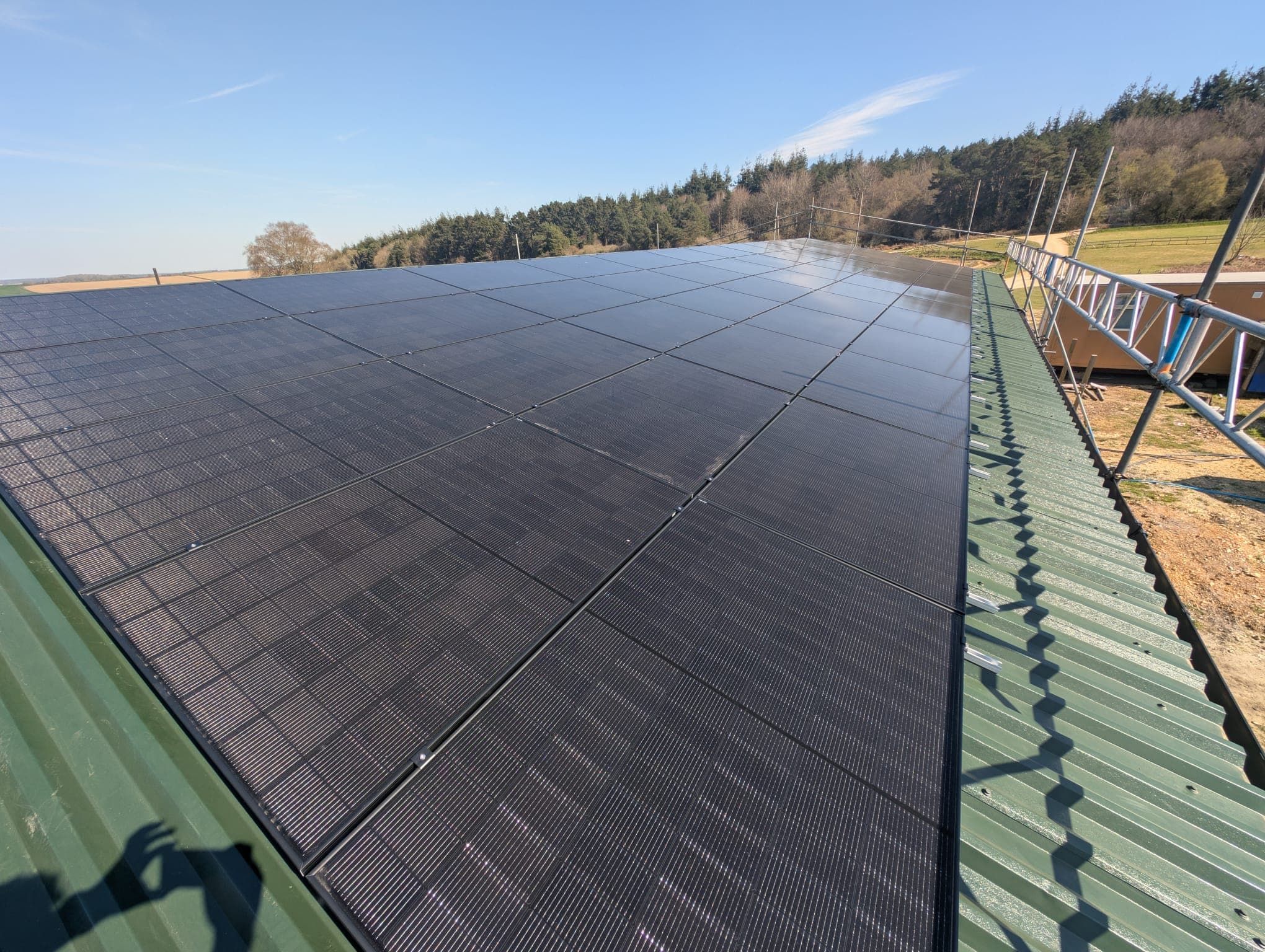
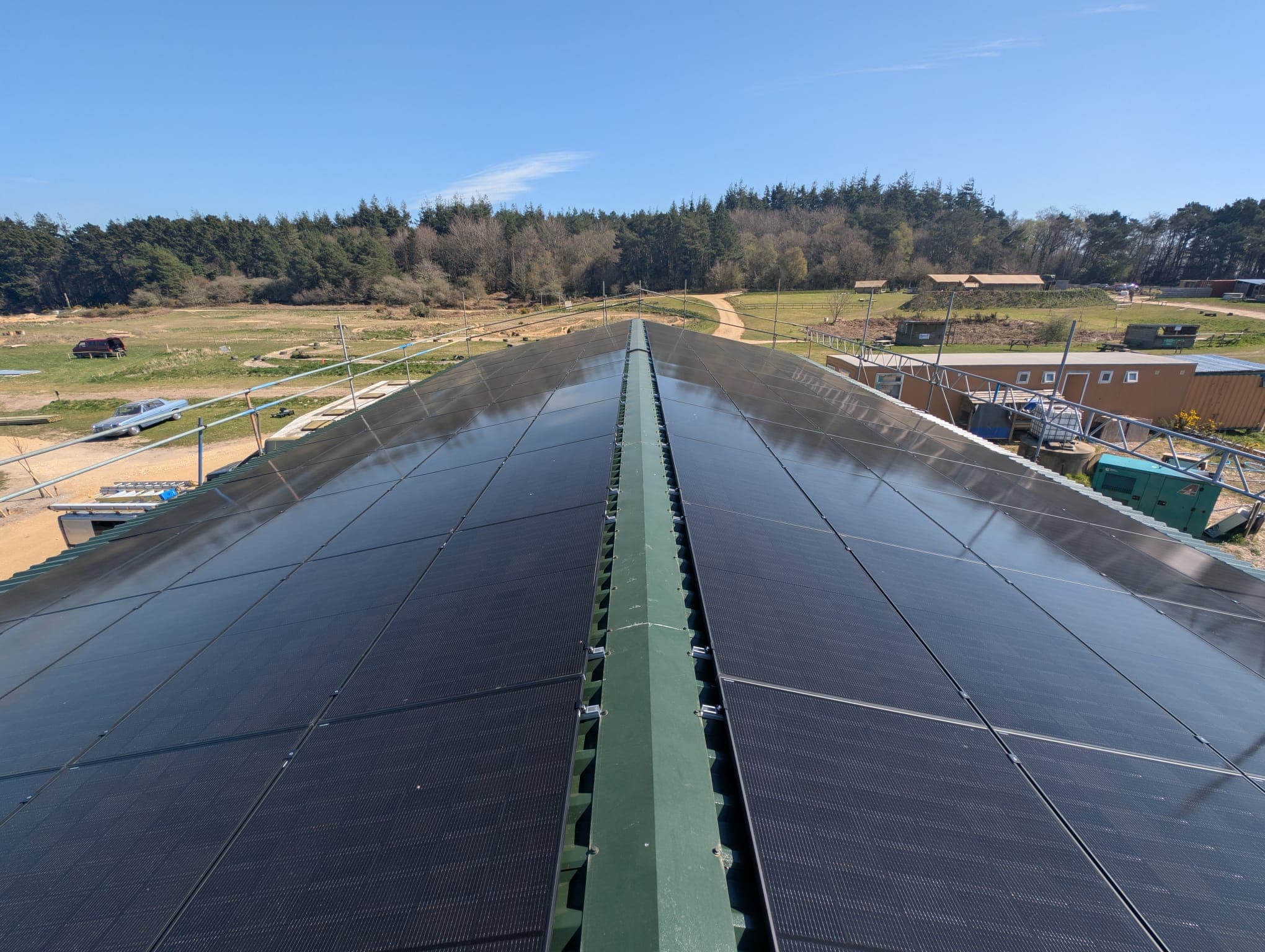
Max Events, Dorchester: a £150k+ grid quote became about £70k of solar, battery and generator
Max Events runs a workshop, an extra-curricular school facility, cabins and a glamping field. It was on diesel generator power, and the mains connection had been priced too high to be worth it.
- 120 DMEGC 450W panels (54kW) and two Sunsynk 30kW off-grid inverters
- Twelve 5.12kWh high-voltage batteries in two expandable racks (62kWh)
- Around 44,000kWh a year, on a conservative estimate
- The generator starts automatically at 12% battery and takes over at 10%, so the site never loses power
- All the roof work done in 3 days, with room to expand for a second barn
The customer projects a diesel saving of over £1,000,000 across the life of the system, from their own figures.
Money, tax and grants
Money matters for a farm system: VAT, finance, tax relief and grants
General points for you to check with your accountant. This isn't tax advice.
VAT
Commercial installs carry 20% VAT, which offsets your taxable profit.
Finance
Finance options are available, subject to status. We talk through what suits your situation at the assessment.
Capital allowances and business rates
Solar and battery kit is generally treated as plant and machinery, and eligible renewable equipment is exempt from business rates in England until 2035. Ask your accountant and your rates adviser how it applies to you.
Grants
Grant schemes for farm energy change often. We don't build one into any figure, so the numbers have to work without it. Check the current position with your land agent or the Rural Payments Agency.
Planning and permissions
What to expect on planning in Dorset
Every site is different, and we confirm what yours needs at the survey. These are the usual points.
Roof panels
Panels on a barn or outbuilding roof are often simpler than a ground-mount, but not always. Listed buildings and conservation areas change the rules.
Ground-mount
Normally needs permission. Allow around 2 to 4 months. Councils look closely at the quality of the farmland used, so a poor field is easier than a good one.
Landscape designations
Much of rural Dorset sits in a National Landscape (formerly an AONB), and the New Forest National Park lies just over the eastern border. These bring extra scrutiny of ground-mounted arrays.
How it works
How a farm install runs, with minimal disruption to trading
We plan the work around your operations. Even on large installs, disruption to trading is kept to a minimum.
Before you decide anything
- 1
Tell us about the farm
Your buildings, your usage and your plans. A few quick questions, or just give us a call.
- 2
A quick call from Phil or Jake
To understand your loads and what is driving the question. No sales pitch, no pressure.
- 3
Your report and quote, in writing
The system we would design, what it costs and the payback. Take your time and compare other quotes.
- 4
A free farm assessment
A thorough survey of your roofs, land and load, so the yield estimate holds up through the year.
Once you've said yes
- 5
Planning, DNO and scheduling
We manage the DNO application and any planning application, and agree access and timings around your work.
- 6
Install, planned around trading
The work is phased to keep your operations running. Roof work on the Dorchester site took 3 days.
- 7
Handover and monitoring
Monitoring is set up so you can see what the system makes. Wireless communication is built in on bigger sites.
Customer reviews
What customers say about working with us

We have been researching the whole solar installation for a while, having had numerous conversations with some of the national companies who seemed to be pushing very hard, we eventually found New Gen Renewables and are pleased we did. Our installation was completed last week, Phil and his team at NGR have held our hand through the entire project, the guys installing the panels, the electrician connecting us have done a great job. Communication has been great, we have now received all our warranties & insurance docs. The cost of solar is a significant amount, the nuances of the solar business can be taxing & complex, we are pleased we put our faith in Phil and his team, and yes, the price was to our liking.
Posted on Google
Great service from New-Gen! Very personal and very reasonably priced Had 24 panels installed with inverter and 2 batteries. All working perfectly
Posted on Google
We recently had solar panels and battery storage installed at our property in Poole by New Gen Renewables, and I couldn't be more impressed with the service we received. From the very start, the team were incredibly helpful, knowledgeable, and professional. They took the time to explain everything clearly and made the whole process feel smooth and stress-free. The installation itself was carried out efficiently and to a very high standard. Everyone we dealt with was friendly and approachable, and it was clear they genuinely cared about delivering a great result. We’re already seeing the benefits of going solar and feel confident knowing we’ve chosen a reliable and trustworthy company. Highly recommend New Gen Renewables to anyone considering solar energy for their home!
Posted on Google
- Your yearly usage
- from your bill (kWh)
- System designed for you
- sized to your usage
- Your free quote
- £ ______
- Estimated monthly saving
- £ ______
- Payback period
- __ years
Estimates for your home, never promises. Illustration only.
Free, in writing, no obligation
Get your farm's report and quote, in writing
Tell us about your farm, your usage and your buildings. We design the system, and send the cost, savings and payback in writing before anyone visits.
- The system we’d design for youPanels and battery sized to your usage, using satellite images of your roof.
- Your free quoteWhat that system costs. If you decide to go ahead, a free roof survey confirms it.
- Your monthly savingsWorked out from your usage and your tariff. An estimate for your home, never a promise.
- Your total payback periodWe aim for under 7 years, with most systems between 6 and 8.
Compare and explore
Commercial solar, off-grid and batteries
Commercial Solar
Larger systems for factories, warehouses and farms, sized to your load.
Find out moreOff-Grid Solar
Full independence from the grid for barns, farms and sites with no mains connection.
Find out more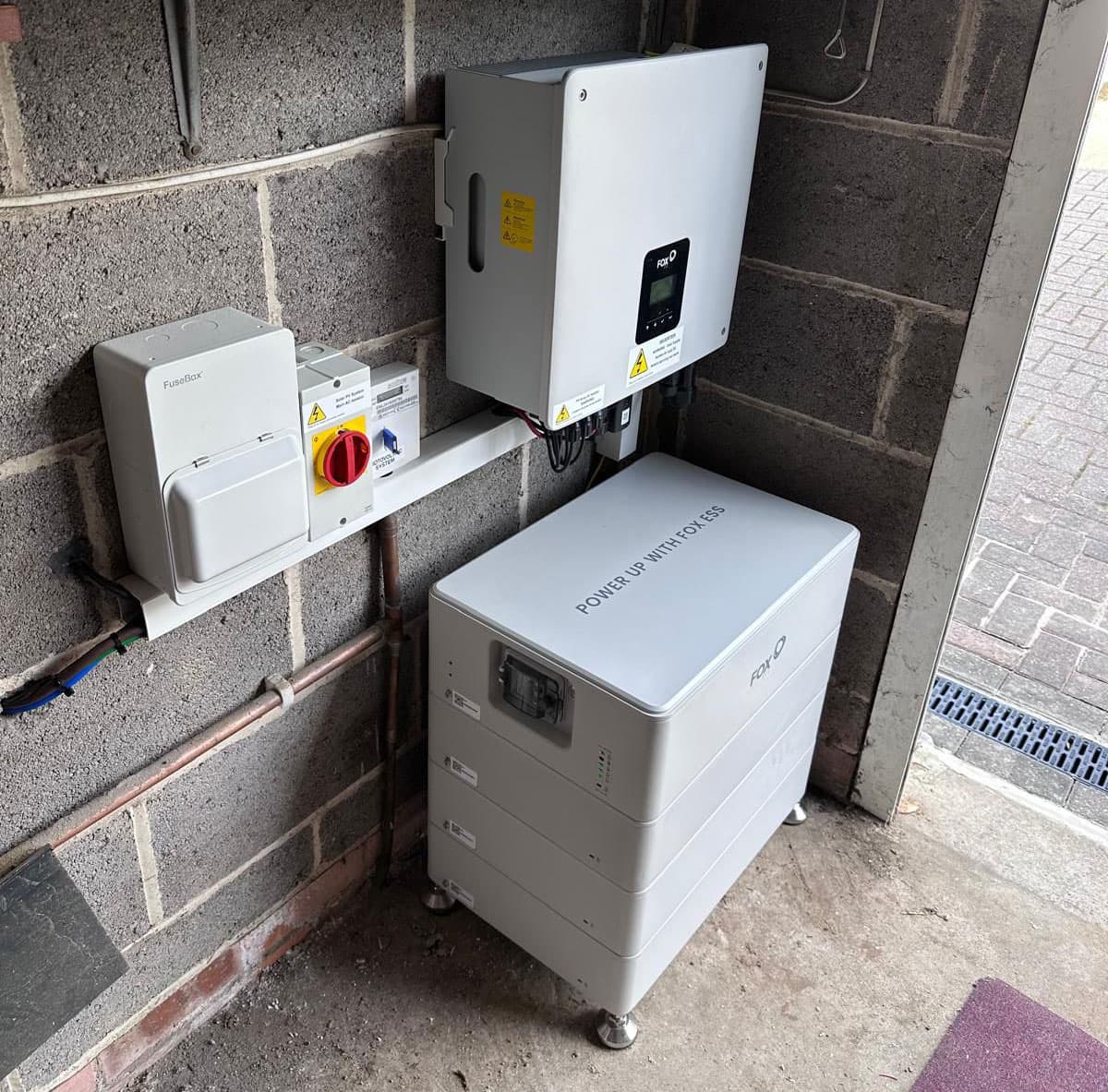
Battery Storage
Modular, stackable batteries, including racks for commercial and off-grid sites.
Find out moreWhere we work
Farm solar across rural Dorset
Based at Merley House in Broadstone, and working across Dorset. These are our nearest town pages.
Questions
Questions farmers ask us
How much do solar panels for a farm cost?
It depends on your buildings, your land and your load. A barn-roof system is priced differently from a ground-mount or an off-grid system, and larger systems cost less per kW. We don't publish a price per kW for farms, so your figure comes from your own report and quote. For reference, a 50kW commercial system of ours is projected to pay for itself in around 24 to 30 months, and commercial systems typically pay back in about 4 years. Those are illustrative, never guaranteed.
Can farmers get grants or funding for solar panels?
Grant schemes for farm energy come and go, and we don't build one into any of our figures. Check the current position with your land agent or the Rural Payments Agency. Finance is available, subject to status, and commercial installs carry 20% VAT, which offsets your taxable profit. Ask your accountant about capital allowances and business rates as well, because both can improve the return.
Can I put solar panels on agricultural land, and do I need planning permission?
Ground-mounted systems on farmland normally need planning permission, which usually takes around 2 to 4 months. Panels on a barn or outbuilding roof are often simpler, and we confirm exactly what your site needs at the survey. Landscape designations, listed buildings and the grade of your land can all affect an application.
Barn roof, ground-mount or off-grid: which suits my farm?
It depends on your roof, your spare land and how remote the site is. Trapezoidal roofs are the safest and cheapest to fit. Fibre-cement roofs need more care and cost more to work on. Where the roof doesn't stack up, ground-mount is an option. Remote fields, or sites with an expensive grid connection, are often better served by an off-grid solar, battery and generator system.
Is this the same as leasing my land to a solar farm?
No. We design and install systems that make power for your own farm to use, cutting the cost of machinery, refrigeration and buildings, or replacing an expensive grid connection. We don't develop utility-scale solar farms or lease land for them.
What if my farm has no affordable grid connection?
Off-grid can work out cheaper. Grid connection quotes we have seen for semi-remote sites run from £70,000 to £150,000. For one Dorchester events site quoted over £150,000, we installed an off-grid solar, battery and generator system for around £70,000. Your own figure depends entirely on your site and load.
How disruptive is the install to farm operations?
We plan the work to keep disruption to your operations to a minimum, even on large installs. On the Dorchester job, all the roof work was done in 3 days. We agree access and timings with you at the survey.
Who do I trust to design and install a farm system, and what's the warranty?
We're MCS and NAPIT certified (NAP-78112), RECC members, and carry an insurance-backed workmanship warranty (IWA) and £2 million of insurance, so your cover doesn't disappear if we ever stopped trading. We've installed and managed over 1.2MW of commercial solar. Panels carry a 25-year product and 30-year performance warranty, and we won't fit any panel, inverter or battery with under a 10-year warranty.
What size of farm system have you installed?
We've installed and managed systems of around 60kW, 100kW and 200kW, and over 1.2MW of commercial solar in total. Farm-scale jobs include a 54kW off-grid system with a 62kWh battery in Dorchester, and a 50kW system on a large roof near Wimborne.
Discuss your farm's solar project before anyone visits
Honest farm-scale numbers and real off-grid experience. No push for a sale on the day, and you're welcome to compare us with other quotes. Or just call and ask first.