
Solar Battery Storage Systems Explained
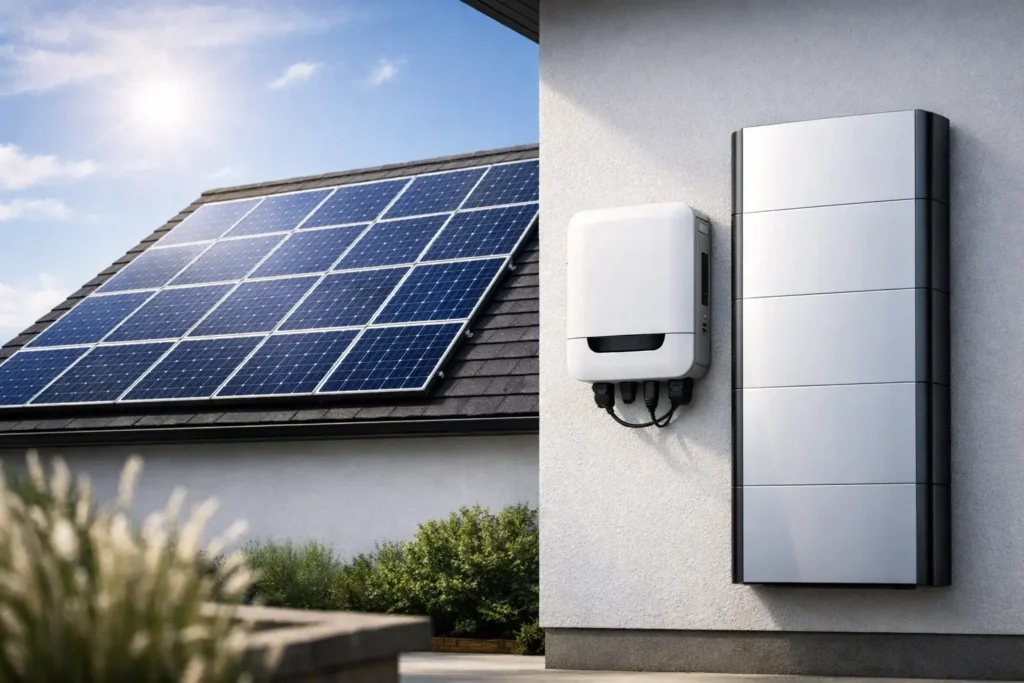
If your solar panels generate most of their power in the middle of the day, but your highest electricity use happens in the morning and evening, there is an obvious gap. Solar battery storage systems are designed to close it. Rather than exporting surplus electricity back to the grid straight away, they store usable energy for later, helping households and businesses get more value from the power they already produce.
That sounds straightforward, but choosing the right setup is rarely a one-size-fits-all decision. The best result depends on how much electricity you use, when you use it, whether you already have solar, and what you want the battery to achieve. For some people, the priority is lower bills. For others, it is backup power, better use of off-peak tariffs, or greater independence from rising energy prices.
What solar battery storage systems actually do
At a basic level, a battery stores electricity that would otherwise go unused on site. In a typical solar-only system, excess generation during sunny periods is often exported to the grid. With battery storage added, that surplus can be held back and used later when generation drops and demand rises.
For a homeowner, that might mean running lighting, appliances and evening devices on stored solar power rather than buying electricity from the grid after sunset. For a business, it could mean reducing peak-time imports, smoothing out energy demand, and making better use of energy generated on site during working hours.
Modern systems do more than simply charge and discharge. Many can be programmed around time-of-use tariffs, so they charge when electricity is cheaper and discharge when prices rise. Some also integrate with backup circuits, EV chargers or off-grid setups. The technology is flexible, but that flexibility only helps if the system is designed properly from the start.
Why more property owners are considering battery storage
The strongest reason is financial. If you are exporting solar electricity at a lower rate than the price you pay to import electricity later, it often makes sense to use more of your own generation on site. A battery increases self-consumption, which can improve the overall return on your solar investment.
There is also the resilience factor. Grid power is generally reliable, but reliability is not the same as certainty. Some battery systems can provide backup during outages, although not all do, and the level of backup varies by design. If continuity matters – whether for refrigeration, internet, alarm systems or business equipment – this should be discussed early rather than treated as an add-on later.
The third driver is control. Energy costs are harder to predict than they used to be, and many customers want more certainty over how and when they use electricity. Storage does not remove your dependence on the grid completely in most cases, but it can reduce exposure and make your energy use more manageable.
How to judge whether a solar battery storage system is worth it
The answer usually comes down to usage patterns, not just total consumption. Two properties with the same annual electricity use can get very different results from battery storage. A home that is empty all day and busy in the evening may benefit more than one where usage already matches daytime solar generation. Likewise, a business that closes at 5 pm may need a different storage strategy from one with refrigeration, overnight loads or weekend demand.
Battery size matters as well. Bigger is not automatically better. An oversized battery may cost more than the value it adds if you do not generate enough surplus energy to charge it consistently. An undersized battery may fill quickly and leave useful solar energy still being exported. The right balance comes from looking at generation forecasts, seasonal performance and half-hourly or smart meter usage data where available.
Payback also depends on your tariff. If you are on a smart tariff with wide differences between peak and off-peak rates, battery economics can look stronger. If your export payments are attractive and your evening usage is low, the case may be less compelling. Good advice should reflect these trade-offs clearly, not push storage as the right answer for everyone.
Solar battery storage systems for homes
For residential properties, the main benefits are usually bill reduction, better use of solar generation and peace of mind. Families often consume a large share of their electricity outside peak solar hours, especially in winter when lights, cooking and heating controls are all in use during darker parts of the day. Storage can help shift daytime generation into those periods.
A home battery may also work well alongside an EV charger, particularly if the vehicle is charged in the evening. In some cases, the battery can reduce how much expensive electricity is imported at high-rate times. That said, an EV can also increase total demand significantly, so the rest of the system may need to be sized around that added load rather than fitted as an afterthought.
Space, installation location and future plans are all worth considering. If a household expects higher energy use later – perhaps due to a heat pump, home office expansion or an electric vehicle – that should be factored into the design now.
Commercial battery storage has a different logic
For businesses, the calculation is often broader than simple self-consumption. Battery storage can help manage peak demand, reduce exposure to expensive import periods and support operational continuity. In the right setting, that can have a measurable effect on running costs.
Commercial sites also tend to have more varied load profiles. Offices, workshops, retail premises, hospitality sites and agricultural buildings all behave differently. Some use most of their electricity during solar-generating hours, while others have early starts, evening trade or essential overnight equipment. That is why commercial storage should be based on operational data and site priorities, not generic assumptions.
Battery storage can be especially useful where energy resilience matters. If a site relies on refrigeration, payment systems, communications or security equipment, a well-designed battery setup can play an important role in reducing disruption. The details depend on the building, the supply arrangement and whether backup functionality is part of the brief.
Choosing the right battery and system design
There is a lot of attention on battery brand and headline capacity, but system design matters just as much. A well-matched inverter, sensible battery sizing and clear programming logic often have more impact on day-to-day performance than marketing claims.
The key figures to review are usable capacity, power output, round-trip efficiency and warranty terms. Usable capacity tells you how much stored electricity is actually available. Power output affects how many appliances or loads the battery can support at once. Efficiency influences how much energy is lost in the storage cycle. Warranty structure is important because some products are covered by years, while others are also limited by throughput or expected remaining capacity.
Compatibility is another practical issue. If you already have solar, the battery may need to work with an existing inverter, or you may need an AC-coupled solution instead. If you are installing from scratch, there may be more flexibility. Either way, the design should be tailored to the property rather than built around whatever stock happens to be available.
Installation quality matters more than many buyers realise
Battery performance is not only about the hardware. It also depends on where it is installed, how it is commissioned and whether the system settings are configured properly for your tariff and usage. Poor installation can reduce efficiency, limit functionality or create avoidable faults.
This is where working with an experienced, properly accredited installer becomes important. Customers are right to ask who is carrying out the work, what compliance standards are followed, and what aftercare looks like if the system needs support later. A clear proposal should explain expected performance, limitations, warranties and installation scope without vague language or inflated savings claims.
For property owners in Dorset and Hampshire, local support can also make a real difference. When a system is designed, installed and supported by a team that knows the area and manages the process in-house, communication tends to be clearer and accountability much stronger.
Are solar battery storage systems right for everyone?
Not always, and that is worth saying plainly. If your electricity use already lines up closely with daytime solar production, a battery may add less value. If your export tariff is strong and your evening demand is modest, the numbers may be less convincing. If backup power is your main goal, the system must be designed specifically for that purpose rather than assumed to provide it.
But for many homes and businesses, storage is becoming easier to justify because energy costs, tariff structures and expectations around resilience have changed. The strongest projects are usually the ones where the battery has a clear job to do and the design reflects how the property actually uses electricity.
A good solar and storage system should feel practical, not complicated. When the design is based on real usage, the quote is transparent, and the installation is carried out properly, battery storage becomes less about chasing trends and more about making your energy work harder for you.