
Solar Energy Storage Systems for Home
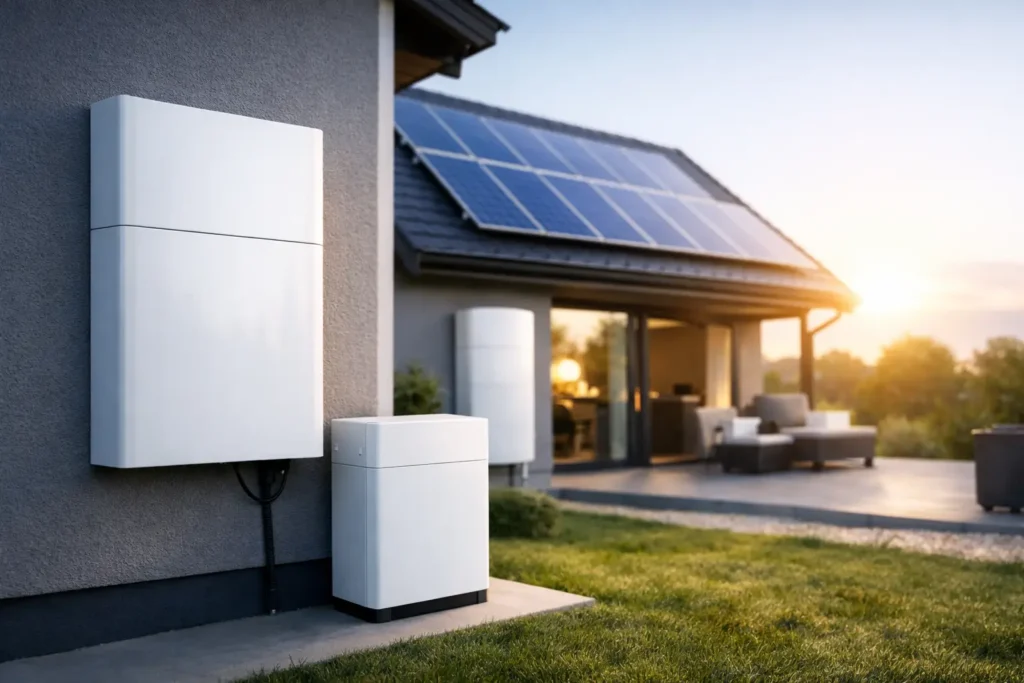
A lot of homeowners first look at battery storage after seeing the same pattern for months: solar panels generate well during the day, but the highest household use often comes later, when people are home, cooking, charging devices and switching lights on. That gap is exactly why solar energy storage systems for home have become such a practical upgrade rather than a niche extra.
A home battery stores surplus electricity generated by your solar panels so you can use more of your own power instead of sending it back to the grid. In simple terms, it helps you keep more of what you produce. For many households, that means lower electricity bills, better use of their solar system and a measure of protection against rising energy prices.
What solar energy storage systems for home actually do
Without a battery, most homes use solar generation as it is produced. If your panels are generating at midday but the house is mostly empty, much of that power may be exported. Then, in the evening, you buy electricity back from the grid when tariffs are often less favourable.
Battery storage changes that pattern. The system stores excess solar during the day and releases it when demand increases later on. That could be in the early evening, overnight, or during dull periods when generation drops. Some systems can also charge from the grid at cheaper off-peak times, depending on your tariff and how the battery is configured.
This matters because the value of a battery is not only in how much electricity it stores, but in when that electricity is available. Good system design looks at your generation profile, your usage habits and your tariff structure together, rather than treating battery storage as a one-size-fits-all add-on.
Are home battery systems worth it?
For the right property, yes, but the honest answer is that it depends on how you use energy.
If your household is out all day and your solar system regularly exports a large share of its generation, a battery can make strong financial sense because it captures electricity that would otherwise leave the property. If you already have high evening usage, perhaps from cooking, home working, heat pumps or EV charging, the case can be even stronger.
On the other hand, if your daytime energy use already matches most of your solar generation, the gains from battery storage may be more modest. The battery still adds flexibility and future-proofs the system, but the payback may be longer.
This is why clear forecasting matters. A proper proposal should estimate not just panel generation, but likely self-consumption, battery cycling and expected savings under realistic conditions. Vague claims are easy to make in this sector. Reliable design work is more valuable.
Choosing the right solar energy storage systems for home
The best battery is not automatically the biggest one. Oversizing can leave you paying for capacity you rarely use, while undersizing may mean the battery empties too quickly to make a meaningful difference.
A suitable system usually comes down to four things: your solar array size, your daily and seasonal electricity use, whether you want backup capability, and how much budget you want to allocate now versus later.
Battery capacity is measured in kilowatt-hours. As a rough guide, smaller households with modest evening demand may suit a lower-capacity battery, while larger homes with heavier usage may benefit from more storage. But the useful figure is not just total capacity. You also need to consider usable capacity, power output and whether the system can support key loads during an outage.
That last point catches many people out. Not every battery provides backup power automatically. Some batteries are designed mainly for bill savings and self-consumption. Others can power selected circuits during a power cut if they are installed with the right backup hardware. If resilience matters to you, this should be discussed from the start, not added as an afterthought.
AC-coupled and DC-coupled systems
You may also hear installers talk about AC-coupled and DC-coupled battery systems. The technical detail matters less than choosing the right setup for your property.
DC-coupled systems are often well suited to new solar installations because the panels and battery are designed to work together efficiently from the outset. AC-coupled systems are commonly used when adding a battery to an existing solar array, as they can often be integrated more easily.
Neither is universally better. The right option depends on what you already have, how the property is wired and what performance you want from the system.
What affects cost and return
Battery prices vary based on capacity, brand, backup features, installation complexity and whether the battery is being added to a new or existing solar system. A straightforward installation is not priced the same way as a property needing consumer unit upgrades, more complex cabling or tailored backup circuits.
The return on investment also depends on more than the battery itself. Your tariff plays a part, especially if you can make use of off-peak charging. So does the export rate you receive for unused solar. Households with high evening demand often see stronger savings because more stored energy offsets imported electricity at the point it would otherwise cost the most.
Warranties matter here as well. A battery is a long-term investment, and the headline capacity means little without a clear understanding of cycle life, performance guarantee and aftercare support. The cheapest quote is not always the best value if it cuts corners on specification, workmanship or post-installation support.
Installation quality matters more than many buyers realise
Battery storage is not just a product purchase. It is a system that needs to be designed, installed and configured properly.
Poor design can lead to underperformance, awkward system limitations or savings that never match expectations. Poor installation can create reliability issues and safety concerns. That is why homeowners should look closely at who is doing the work, how the system will be commissioned, and what support is available afterwards.
A well-run project should include a proper site assessment, realistic modelling, clear explanation of expected performance and transparent pricing. You should know what equipment is being installed, how it will operate, what monitoring is included and what happens if anything needs attention later.
For homeowners in areas such as Bournemouth, Poole and Christchurch, working with a local installer can also make practical sense. Site knowledge, local reputation and ongoing support are often worth more than a national sales pitch followed by outsourced installation.
Is battery storage right for homes without solar?
Sometimes, yes. Although batteries are most often paired with solar panels, they can still be useful on their own in homes using time-of-use tariffs. In that setup, the battery charges when electricity is cheaper and discharges when rates are higher.
That said, the strongest long-term value usually comes when battery storage is combined with on-site generation. Solar and storage work best together because the battery allows you to use more of the electricity you generate yourself, which improves the overall return from the system.
Common misconceptions to avoid
One common assumption is that a battery will eliminate grid reliance completely. For most grid-connected homes, that is not the aim. The battery reduces reliance on imported electricity, but unless the property is designed for off-grid living, the grid still plays a role.
Another misunderstanding is that bigger always means better. In reality, a battery should match the home. Too much storage can mean unused capacity for much of the year, especially in winter when solar generation is lower.
There is also the idea that all systems perform much the same. They do not. Battery chemistry, inverter compatibility, software controls, warranty terms and installation quality all affect the real-world result.
What to ask before you go ahead
Before choosing a system, ask how much of your current solar export could realistically be stored, how much of your evening demand the battery is expected to cover, and whether backup power is included or optional. Ask for savings estimates based on your usage, not generic averages.
It is also worth asking who will install the system, whether the work is handled in-house, what monitoring platform you will use, and what aftercare looks like if you need support in future. A clear answer to these points usually tells you a lot about the quality of the company behind the quote.
At New Gen Renewables, that practical, tailored approach matters because battery storage is only worthwhile when it is designed around the way a property actually uses energy. The right system should feel straightforward, dependable and properly explained from the outset.
If you are considering solar energy storage systems for home, the best next step is not to chase the largest battery or the lowest headline price. It is to understand how your home uses electricity, what level of savings or backup you want, and whether the system in front of you has been designed with care rather than sold on promises.