
Solar Payback Period Guide for UK Homes
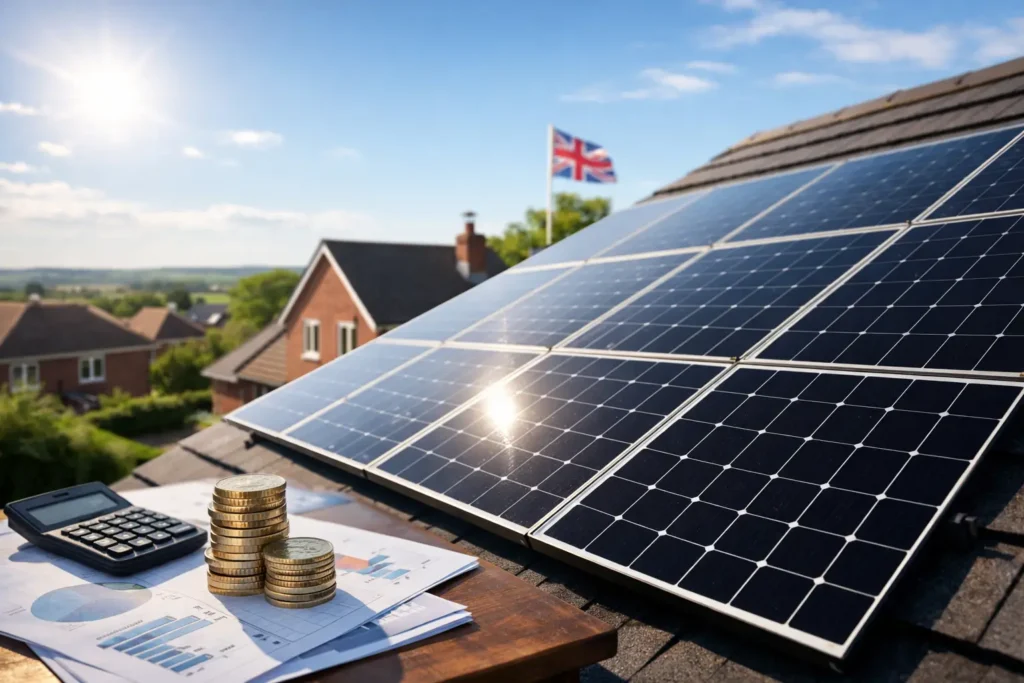
If you have been quoted for solar and your first question is, “When does it pay for itself?”, you are asking exactly the right thing. A good solar payback period guide should give you more than a headline number. It should show what sits behind that estimate, what can speed it up, and where unrealistic promises usually creep in.
For most property owners, payback is not just about saving money on bills. It is about judging whether the system size, battery option, and overall proposal make sense for the way you actually use energy. That is why payback needs to be explained clearly, not dressed up as a sales shortcut.
What the solar payback period guide really means
The payback period is the time it takes for your energy savings and any export income to recover the upfront cost of your solar installation. If a system costs £8,000 and saves or earns you £1,000 a year, the simple payback is around 8 years.
That sounds straightforward, but real-world payback is rarely one fixed figure. Energy prices change. Your household or business consumption changes. Battery storage may increase self-use but add to the upfront spend. Roof orientation, shading, and panel output all matter. So the useful question is not just, “What is the payback period?” but, “What is a realistic payback period for this property and this usage pattern?”
How to calculate solar payback period
The basic formula is simple: total installed cost divided by annual financial benefit. Annual financial benefit usually includes the electricity you no longer need to buy from the grid, plus any income from exported electricity where applicable.
For example, if your system costs £10,000 and your combined annual benefit is £1,250, the simple payback is 8 years. That gives you a starting point, but it is still only a simplified view.
A better calculation also considers how much of your solar power you use on site, whether you add battery storage, whether finance changes the picture in the short term, and how future electricity prices may affect savings. For businesses, you may also need to factor in trading hours, seasonal demand, and whether higher daytime consumption improves the value of solar generation.
What affects solar payback most
The biggest driver is usually self-consumption. In plain terms, the more of your own solar electricity you use as it is generated, the faster the system tends to pay back. Electricity you avoid buying at retail rates is usually more valuable than electricity exported for a lower tariff.
That is why two similar properties can have very different results. A household that is empty all day may export more power and save less directly unless it uses a battery or shifts demand to daylight hours. A business operating mainly during the day may use a much greater share on site, which can make payback look stronger from the outset.
System cost is the next major factor. Lower cost can improve payback, but cheapest is not always best. Poor design, weak component choices, or unreliable installation can damage long-term returns. If a lower quote produces less energy, needs remedial work, or comes with vague warranty support, the apparent saving can disappear quickly.
Roof characteristics also matter. South-facing roofs usually perform very well, but east-west layouts can still be excellent, especially if they match morning and late afternoon demand. Shading from chimneys, trees, or neighbouring buildings can reduce generation, so estimates should reflect the actual site rather than ideal conditions.
Then there is battery storage. A battery can improve payback in some situations by helping you use more of your own electricity later in the day. But it does not automatically shorten payback in every case. If the battery adds significant cost and your daytime usage is already high, the improvement may be smaller than expected. This is one of the clearest examples of why tailored system design matters.
A realistic UK payback range
For many UK homes, solar payback often falls somewhere around 7 to 12 years, though there is no universal figure that suits every property. Some systems perform better, particularly where daytime use is strong, energy prices are high, and the roof is well suited. Others take longer, especially where consumption is low during daylight hours or installation costs are higher due to roof complexity.
For commercial properties, payback can sometimes be shorter because businesses often use more electricity during the day, when solar is generating. That stronger alignment between generation and demand can make on-site savings more valuable. On the other hand, larger systems, structural considerations, or electrical upgrades can affect the upfront cost.
If someone gives you a payback estimate without asking about your usage profile, tariff, roof layout, or future plans such as EV charging, it is worth being cautious. A believable projection should be built around your property, not a generic national average.
Why simple payback is useful – and where it falls short
Simple payback is helpful because it gives you a quick sense of viability. It is easy to understand and easy to compare across options. If one proposal shows 9 years and another shows 14, that difference tells you something important.
But simple payback does not capture the full value of solar. Panels can continue generating well beyond the payback point, often for decades. That means the years after payback are where much of the long-term value sits. It also does not account well for future energy inflation, maintenance expectations, equipment lifespan, or the fact that energy independence itself has value for many households and businesses.
A more complete view looks at lifetime return, not just the moment the system breaks even. Payback matters, but it should not be the only lens.
How to improve your solar payback period
If you want better payback, the answer is not always a bigger system. It is usually a better-matched one.
Start with accurate system design. The right number of panels, the right inverter setup, and a realistic assessment of shading and roof aspect all make a difference. Then look at how you use electricity. Running appliances during the day, charging an EV when solar is generating, or pairing solar with battery storage where it genuinely suits your pattern can improve returns.
Tariff choice also matters. Import and export rates can change the numbers more than people expect. A good proposal should not ignore that. It should show where the assumptions sit and how sensitive your payback is to changes in usage or pricing.
For businesses, operational timing is often the key lever. If your site is active during daylight hours, solar can perform very well. If most demand comes early morning, evening, or overnight, battery storage or a different system approach may deserve closer attention.
Questions worth asking before you accept a payback estimate
A trustworthy installer should be able to explain how the figure was produced in plain English. Ask what annual generation has been assumed, how much of that electricity is expected to be used on site, what export rate has been included, and whether battery savings have been modelled conservatively.
You should also ask whether the quote includes everything required for a compliant, finished installation. If one proposal appears much cheaper, it is worth checking whether scaffolding, monitoring, electrical upgrades, or aftercare have been treated consistently. A payback figure only means something if the underlying quote is complete.
For homeowners and businesses across Dorset and Hampshire, this is where local site knowledge can help. Roof types, planning considerations, coastal weather exposure, and real usage patterns all shape outcomes more than broad online averages ever will.
The best way to use a solar payback period guide
Use payback as a decision tool, not a sales trigger. A strong proposal should help you compare options calmly and understand the trade-offs. You may find that a slightly higher upfront investment gives stronger long-term value. Or you may decide that a simpler system without a battery makes better financial sense for now.
At New Gen Renewables, that is the conversation worth having – one based on clear numbers, realistic assumptions, and a system designed around the property rather than a one-size-fits-all target.
The right solar investment should feel understandable before it feels exciting. If the figures are clear, the design is tailored, and the assumptions are honest, payback becomes far easier to trust.