
Solar Battery Backup Systems for Homes
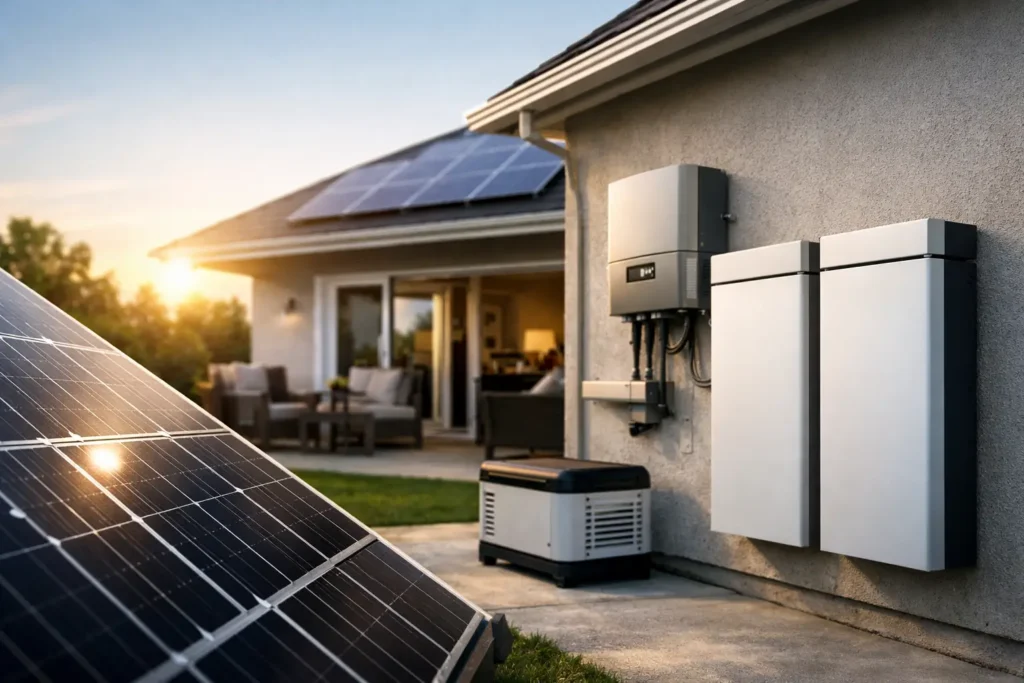
A power cut always seems to happen at the worst possible time – during dinner, overnight in winter, or just as you realise how much of daily life depends on electricity. That is why more homeowners are now looking closely at solar battery backup systems for homes, not just as a way to store spare solar energy, but as a practical step towards lower bills and better resilience.
The appeal is easy to understand. A well-designed battery system can store electricity generated during the day and make it available when your panels are no longer producing, such as in the evening or early morning. If the system is configured for backup, it can also keep selected circuits running during a grid outage. The key point, though, is that not every battery setup does both. That is where good design and clear advice matter.
What solar battery backup systems for homes actually do
At their simplest, home battery systems store electricity for later use. In many homes, solar panels generate the most power around midday, when people are often out or using less electricity than the system is producing. Without a battery, that surplus power is usually exported to the grid. With a battery, more of that energy can be used in the home later instead.
That improves self-consumption, which is often where the financial value sits. Rather than buying electricity from the grid in the evening at a higher unit rate, the home can draw from stored solar energy first. Over time, that can make a noticeable difference to electricity costs.
Backup is a separate function. Some batteries can provide emergency power during a power cut, but only if the system includes the right hardware and is set up for that purpose. Many homeowners assume every battery will automatically keep the house running during an outage. In reality, some systems are designed purely for energy shifting and will shut down with the grid unless backup capability has been built in from the start.
Why homeowners are adding battery storage now
The economics have changed. Electricity prices remain a concern for many households, and the value of using your own stored power has become more obvious. At the same time, battery technology has improved, product choice is better, and more homeowners are planning for energy independence rather than just generation.
There is also a lifestyle factor. Homes now rely on more electrical equipment than they did a decade ago – broadband routers, home offices, heat pumps, alarms, refrigeration, EV chargers and smart devices. Even a short outage can be disruptive. For some households, backup power is no longer a nice extra. It is part of making the home more dependable.
For properties in suburban and semi-rural parts of Dorset and Hampshire, where grid interruptions may be a bigger concern than in town centres, backup capability can be especially relevant. Still, the right setup depends on how the home uses energy, not on postcode alone.
Choosing the right solar battery backup system for homes
The best system is not always the biggest battery on the market. It is the one that matches the property, the solar array and the household’s priorities.
Battery capacity is one of the first things people ask about, and understandably so. Capacity affects how much electricity the battery can store, but bigger is not always better. If a household uses most of its electricity during the day, a very large battery may be underused for much of the year. If evening consumption is high, or the property runs heating and appliances after sunset, more storage may make sense.
Power output matters just as much. A battery may store plenty of energy but still have limits on how many appliances it can run at once. This is particularly important for backup use. If the priority is to keep lights, the fridge, broadband and a few sockets running, that is a different design brief from trying to support a whole home with high-load devices.
Then there is the question of whole-house backup versus essential loads backup. Whole-house backup sounds appealing, but it is more demanding and more expensive. Many homes are better served by backing up selected circuits only. That keeps the system more efficient and avoids overspending on capacity that may rarely be used.
The inverter also matters. In some systems, the battery is added to an existing solar setup using an AC-coupled arrangement. In others, a hybrid inverter manages both the solar generation and battery storage together. Neither is automatically right in every case. It depends on whether the property already has solar, how old that system is, and what level of backup is needed.
The trade-offs people should know about
Battery storage is a strong addition to solar, but it is not a magic fix for every energy problem. Honest advice matters here.
First, backup duration depends on what you are trying to run. A battery that can support essential appliances for several hours may not last long if electric heating, immersion heaters or heavy kitchen loads are switched on. During an outage, sensible load management makes a big difference.
Second, winter performance needs realistic expectations. Solar generation is lower in the darker months, which means there may be less excess electricity available to charge the battery from solar alone. Some systems can also charge from the grid on cheaper tariffs, which can still deliver savings, but that should be built into the financial picture from the outset.
Third, payback is not identical from one home to another. Homes with good daytime generation, higher evening use, or time-of-use tariffs often benefit most. Others may still gain from resilience and energy independence, but the return is not one-size-fits-all.
Installation quality is not a detail
A battery system is only as good as its design and installation. That includes cable sizing, protection devices, inverter configuration, emergency backup setup and the way the system integrates with the property’s existing electrical infrastructure. Poor workmanship here can lead to disappointing performance at best and safety issues at worst.
This is why homeowners should look closely at who is actually carrying out the work. An in-house team with proper experience, clear proposals and a structured handover is very different from a sales-led setup that passes the job through several layers of subcontractors. With battery storage, detail matters. So does aftercare.
For homeowners comparing quotes, transparency is usually a good sign. A proper proposal should explain estimated generation, expected battery usage, backup capability, limitations and warranty terms in plain English. If a quote feels vague on what happens during an outage, that is worth challenging before anything is signed.
What a good design process looks like
A sensible battery project starts with the home’s real usage patterns. That means looking at when electricity is used, not just how much is used over a year. Evening demand, overnight baseload, seasonal variation and future changes such as an EV or heat pump all affect the right specification.
From there, the system should be designed around clear priorities. Some households care most about reducing import from the grid. Others want peace of mind during outages. Others want both, balanced against a specific budget. The right installer should be able to talk through those priorities honestly, rather than forcing every customer into the same package.
At New Gen Renewables, that practical, tailored approach is what gives a battery system its long-term value. The equipment matters, but matching it properly to the property matters more.
Is a home battery worth it without solar?
Sometimes, yes. A battery can still help if it charges from the grid at off-peak rates and discharges during more expensive periods. That said, the strongest long-term case is usually when battery storage is paired with solar generation, because the household can capture and use more of its own electricity.
For homes already planning solar, adding battery storage at the same stage can often be more straightforward than retrofitting later. But retrofit projects can work very well too, particularly when the existing solar system is performing well and the household wants to increase self-use.
What to ask before you go ahead
Before making a decision, ask what the battery will power during an outage, how long that backup is likely to last under normal use, whether the system can be expanded later, and how the warranty is structured. It is also worth asking how the proposed system performs in winter, not just on a bright day in July.
Those questions do not complicate the process. They usually make it clearer. A good installer should welcome them and answer plainly.
For many households, solar battery backup systems for homes are no longer a future idea. They are a practical way to keep more of your own power, rely less on the grid and make the home feel better prepared for whatever the next few years bring. The best starting point is not chasing the biggest spec sheet – it is understanding how your home actually uses energy, and building from there.