
How Does Residential Solar Work?
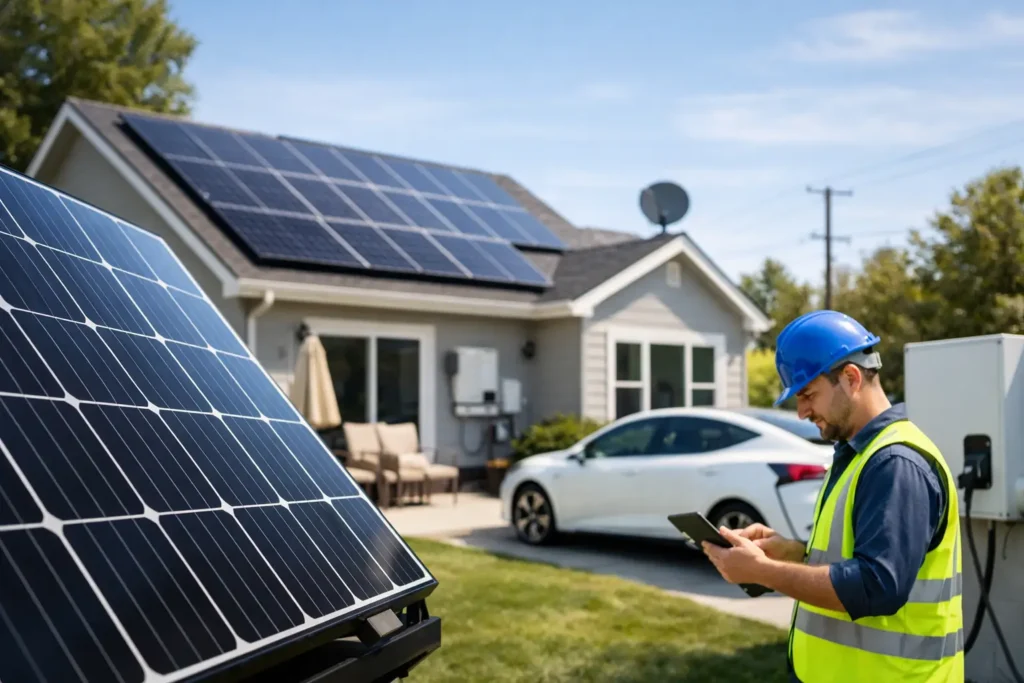
Most homeowners start with the same question: how does residential solar work in real life, not just on a brochure? The short answer is that solar panels turn daylight into electricity your home can use. The more useful answer is that a well-designed system works as part of your property’s wider energy setup, reducing what you buy from the grid and, in some cases, storing spare power for later.
That sounds simple, and in principle it is. What makes the difference is how the system is designed, where the panels are placed, how much electricity your household uses during the day, and whether you add battery storage. If you are weighing up solar for your home, it helps to understand the mechanics without getting buried in jargon.
How does residential solar work step by step?
A residential solar system starts on the roof. Solar panels are made up of photovoltaic cells, often shortened to PV cells. When daylight hits those cells, they generate direct current electricity, known as DC.
Your home, however, runs on alternating current, or AC. That means the electricity produced by the panels has to pass through an inverter, which converts it into the kind of power your appliances can use. Once converted, that electricity flows into your home’s consumer unit and is used by whatever is running at the time – the fridge, lighting, broadband router, washing machine, or anything else drawing power.
If your solar system is generating more electricity than the house needs in that moment, the excess does not have to go to waste. It can either be exported back to the grid or stored in a battery if you have one installed. If the system is not producing enough to cover demand, such as in the evening or on darker winter days, the property simply imports the extra electricity it needs from the grid.
In other words, solar does not replace your grid connection in a standard domestic setup. It reduces your dependence on it.
The main parts of a home solar system
Although solar can look straightforward from the street, several components work together behind the scenes. The panels get most of the attention, but they are only one part of the system.
The panels capture daylight and generate electricity. The inverter converts that electricity into a usable form. The mounting system secures the panels safely to the roof. Generation and usage monitoring helps you see what the system is producing and how the property is consuming energy. If battery storage is included, that adds another layer by holding surplus power for later use.
The electricity meter also plays an important role. It records how much electricity you still import from the grid and, depending on the system and tariff arrangement, how much you export.
A good installer will not just size the panels to fit the roof. They will look at the whole picture, including your daytime usage, roof orientation, shading, future energy plans and whether battery storage or EV charging should be factored in from the start.
What makes solar panels generate electricity?
The key point many people miss is that solar panels work from daylight, not just bright sunshine. Strong sun helps, of course, but panels still produce electricity on cloudy days. In the UK, that matters, because no honest installer should suggest your system only works well in clear summer weather.
When light hits the PV cells inside the panel, it excites electrons and creates an electric current. That is the science in its simplest form. The practical outcome is that your roof becomes a small power station during daylight hours.
How much it generates depends on panel quality, roof angle, orientation, shading, time of year and overall system size. A south-facing roof often performs very well, but east and west-facing roofs can still make strong financial sense. In some homes, splitting panels across both sides of a roof actually gives a more useful spread of generation through the day.
When does solar power get used in your home?
Your home uses solar electricity first, as it is generated. That is one of the most important things to understand if you are thinking about savings.
If the panels are producing 2 kW and your home is using 2 kW at that moment, you are effectively running on solar for that portion of demand. If the home only needs 1 kW, the extra 1 kW can be exported or stored. If the home needs 4 kW, then solar covers part of the load and the rest comes from the grid.
This is why household habits matter. Homes that use more electricity during the day often get stronger direct value from solar alone. Homes that use more power in the evening may benefit more from adding a battery, because it allows daytime generation to be shifted into later hours.
How battery storage changes the picture
Without a battery, unused solar electricity is usually exported. With a battery, that surplus can be stored and used later, often during the evening when the panels are no longer producing.
For many homeowners, battery storage improves self-sufficiency more than panels alone. It does not mean complete energy independence in every case, but it can reduce reliance on imported electricity and make your system more useful beyond daylight hours.
That said, battery storage is not automatically the right choice for everyone. It depends on your usage patterns, budget, tariff structure and long-term plans. If you are out all day and most of your electricity use happens after work, a battery may be a strong addition. If you are home through the day and can use more of your generation directly, the case may be less urgent.
This is where tailored design matters. The right answer is rarely the same for every property.
What affects how well residential solar works?
The roof is a major factor, but it is not the only one. Orientation, pitch and shading all influence output. A roof shaded by trees, neighbouring buildings or chimneys may still be suitable, but the design needs to account for those limitations honestly.
System size matters too. Bigger is not always better if it leads to more generation than you can sensibly use or store. On the other hand, under-sizing a system can mean missing savings that the roof could have supported.
Your electricity habits also shape performance. A household with electric heating, an EV, or high daytime occupancy has very different needs from a smaller household with low usage. Future changes matter as well. If you are planning to buy an electric vehicle or switch more of your heating and hot water to electricity, that can influence the best system size today.
The quality of installation should never be treated as a side issue. Good workmanship, proper electrical design, compliant components and clear commissioning all affect long-term performance and safety.
Does solar work in winter and bad weather?
Yes, but output is lower. In the UK, solar generation is seasonal. Long summer days bring higher production, while shorter winter days naturally reduce it.
That does not mean winter generation is negligible. Panels still work in cold weather, and cooler temperatures can actually support panel efficiency. The bigger issue is reduced daylight hours and lower light intensity, not the cold itself.
This is one reason realistic projections matter. Trustworthy solar advice should explain annual performance, not just best-case summer generation. A sound proposal should show what your system is likely to do across the year so expectations stay grounded.
Is residential solar worth it?
For many homeowners, yes – but the value comes from matching the system to the property and the way the household lives. The benefits usually include lower electricity bills, better protection against rising energy costs, and greater control over how energy is produced and used at home.
The financial return depends on installation cost, electricity prices, export payments, system size and how much of the generated power you use yourself. Battery storage can improve self-consumption, but it also adds cost, so the return needs to be assessed properly rather than assumed.
There are also non-financial reasons people choose solar. Some want to reduce their environmental impact. Others want more resilience and less dependence on volatile energy markets. Most want a combination of sensible savings and long-term confidence.
In areas such as Bournemouth, Poole, Christchurch and across Dorset and Hampshire, where many homes have suitable roof space and strong interest in long-term property improvements, solar can be a practical investment when the system is designed around the building rather than sold as a one-size-fits-all package.
What happens before installation?
Before any panels go on the roof, the property should be properly assessed. That means reviewing roof suitability, household usage, likely generation, electrical setup and any future plans such as battery storage or EV charging.
This stage matters more than many people realise. A clear proposal should explain what is being installed, why it has been recommended, what output is expected and what the costs look like without vague allowances or sales pressure. For homeowners comparing quotes, this is often where the difference shows between a serious installer and a company focused on volume.
A well-planned solar system should feel understandable before work begins. If the design is clear, the installation is compliant and the aftercare is dependable, solar stops being a complicated technology purchase and starts looking like what it really is – a practical upgrade to how your home runs.
If you are still asking how does residential solar work, the most useful answer is this: it works by turning the daylight already falling on your roof into power you would otherwise have to buy, and the better the system is matched to your home, the more value you are likely to see from it over time.