
House Solar Panel Installation Cost UK
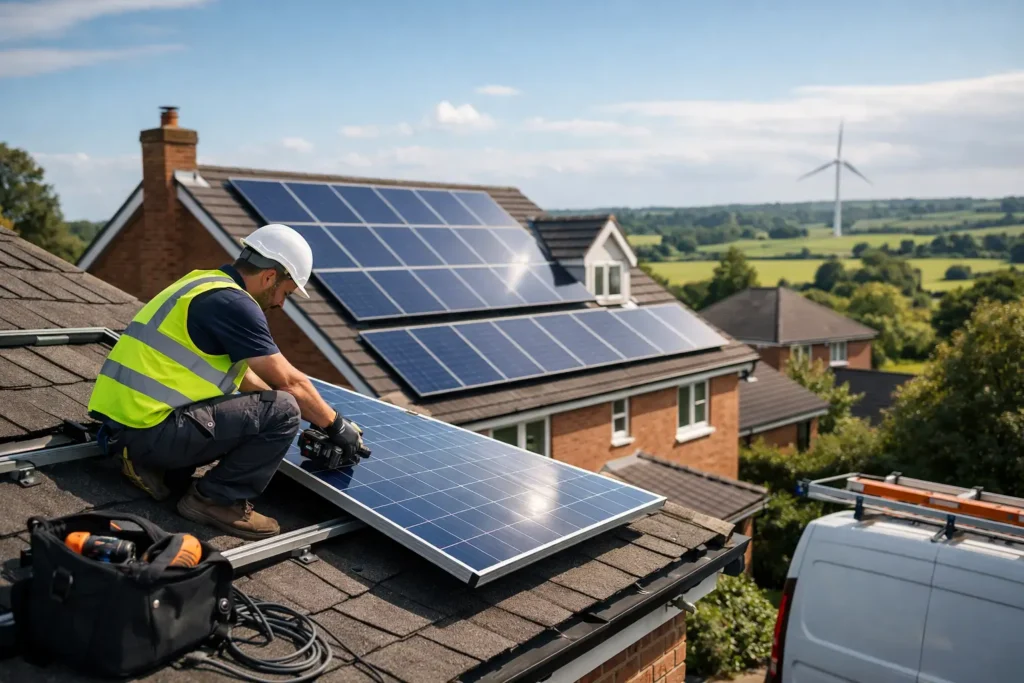
If you have started collecting quotes, you will already know that house solar panel installation cost can vary far more than many homeowners expect. One company may give you a headline figure that looks cheap, while another comes in higher but includes better equipment, stronger warranties and a design that actually suits your property. That difference matters because solar is not a commodity purchase. It is a long-term home improvement that needs to be designed properly from day one.
For most UK homes, the price usually reflects far more than the panels themselves. The final figure is shaped by your roof, your electricity use, the quality of the components, whether you want battery storage, and how carefully the system has been planned. A clear quote should show you what you are paying for and why.
What is the typical house solar panel installation cost?
As a realistic starting point, many homeowners in the UK can expect a standard residential solar PV system to cost somewhere between £5,000 and £9,000. That usually covers a typical rooftop array without battery storage. If you add a battery, the overall price often rises to around £8,000 to £13,000 or more, depending on capacity and equipment choice.
That is a broad range because no two properties are exactly alike. A smaller home with lower daytime electricity use may only need a modest system. A larger family home with higher consumption, an electric vehicle, or plans to add battery storage may need a more substantial setup.
The key point is that the cheapest figure is not always the best value. A low quote can sometimes mean fewer panels than your roof could sensibly take, lower-grade components, limited aftercare or missing elements that appear later as extras.
What affects house solar panel installation cost most?
System size is usually the biggest factor. More panels generally mean higher upfront cost, but they also mean greater generating capacity. If your household uses a lot of electricity during the day, a larger system may deliver better long-term returns than a smaller one that saves less each year.
Roof layout also plays a major role. A simple, accessible roof with plenty of usable space is usually more straightforward to work with than one with multiple elevations, dormers, shading issues or difficult access. Installation on a complex roof can take longer and require more mounting equipment, which affects labour and materials.
The quality of the panels and inverter matters too. Premium products tend to cost more upfront, but they often come with stronger performance, better efficiency and longer warranties. That can be worthwhile if roof space is limited and you need each panel to produce as much as possible.
Battery storage is another major price driver. It is not essential for every home, but it can increase self-consumption by storing spare solar power generated during the day for use later in the evening. For some households, especially those with high evening usage or time-of-use tariffs, that can make a real difference. For others, it may lengthen payback if the battery is oversized or poorly matched.
Scaffolding, electrical upgrades and meter changes can also influence the quote. In some homes, the existing consumer unit or cabling may need work to support the new system safely and compliantly. That is why a proper survey matters.
Why two quotes can look similar but mean very different things
This is where many buyers get caught out. Two installers may both describe a system as suitable for your property, yet the detail behind each proposal can be very different.
One quote might include an MCS-compliant design, trusted equipment brands, generation forecasts, workmanship warranty, bird protection, monitoring setup and aftercare support. Another may offer a low starting price but exclude parts of the installation that you reasonably assumed were included.
It is also worth checking whether the system has been sized around your actual usage rather than a generic estimate. A tailored design should look at your annual consumption, your roof orientation, possible shading and whether your lifestyle means more power is used during the day or in the evening. That level of planning helps avoid underperforming systems and unrealistic savings claims.
Should you add a battery from the start?
It depends on how you use electricity. If your home is empty for most of the day and demand rises in the evening, a battery can help you use more of the solar energy you generate rather than exporting it. That can improve the value you get from the system.
If you are at home during daylight hours and already use a good proportion of your electricity as it is generated, the case for battery storage may be less immediate. In that situation, it can still be worthwhile, but the financial return may be slower.
Some homeowners prefer to install solar panels first and add a battery later. That can be a sensible route if budget is the main constraint. Others want the full system installed at once to avoid future disruption and make the most of self-generated power from the beginning. Neither approach is automatically right. The best option is the one that matches your budget, usage pattern and long-term plans.
Is a bigger system always better value?
Not necessarily, although it often improves the economics if your roof and budget allow for it. The cost per panel can become more efficient on a larger installation because some fixed costs, such as scaffolding and setup, are spread across more generating capacity.
That said, there is no point installing a system that is far larger than your property can sensibly benefit from. A well-designed system should balance roof space, consumption patterns and future needs. If you are planning to buy an electric car, install a heat pump or stay in the property for many years, a slightly larger system may make sense. If your usage is modest and unlikely to change, a more restrained design may be the better investment.
How long does it usually take to see a return?
For many homeowners, payback can fall somewhere around 6 to 12 years, but that range depends on several moving parts. Your installation cost, electricity prices, export payments, battery setup and how much of your own generated power you use all affect the result.
The strongest returns tend to come from homes that use a fair amount of electricity and consume a good share of their solar generation directly. Rising grid prices can improve the value of solar over time, but it is wise to view savings estimates cautiously. Good installers should give realistic projections rather than optimistic promises.
It is also helpful to think beyond simple payback. Solar can reduce exposure to future energy price rises, improve energy independence and add practical value to the property. Those benefits are harder to capture in a single number, but they matter to many households.
What should a trustworthy quote include?
A good quote should be easy to understand. You should be able to see the proposed system size, panel and inverter specification, estimated annual generation, likely savings, warranty terms and what is included in the installation.
You should also know who is carrying out the work. That matters because poor workmanship can undermine even the best equipment. A company that handles design, installation and aftercare in-house can often provide a smoother experience and clearer accountability than a sales-led operation passing work to others.
At New Gen Renewables, this is exactly why transparent quoting matters. Homeowners deserve to know what they are paying for, what performance to expect and how the system has been designed for their property.
The cheapest quote can cost more later
Solar should feel like a confident investment, not a gamble. If a quote seems far below the rest of the market, ask why. Sometimes there is a sensible explanation. Often, there is a compromise hidden somewhere in system design, product quality or support.
A better way to assess house solar panel installation cost is to look at the whole picture: upfront price, expected output, warranty cover, installer credibility and long-term service. That gives you a much clearer sense of value than a single headline number.
If you are comparing options, take your time. Ask direct questions. Make sure the proposal reflects your roof, your energy use and your plans for the future. The right system should not just fit your budget – it should fit your home and carry its value for years to come.
When solar is designed properly, the cost becomes easier to judge because you are no longer buying a promise. You are investing in a system that is built around how you actually live.