
Residential solar panels in Bournemouth & Poole
Bespoke solar, battery and EV systems for Dorset homes, with an honest starting price and the payback shown up front. Warranty-first, no-pressure advice.
- MCS & NAPIT certified
- RECC registered
- £2m public liability
★★★★★5.0 rating on Google
Or call 01202 934 123
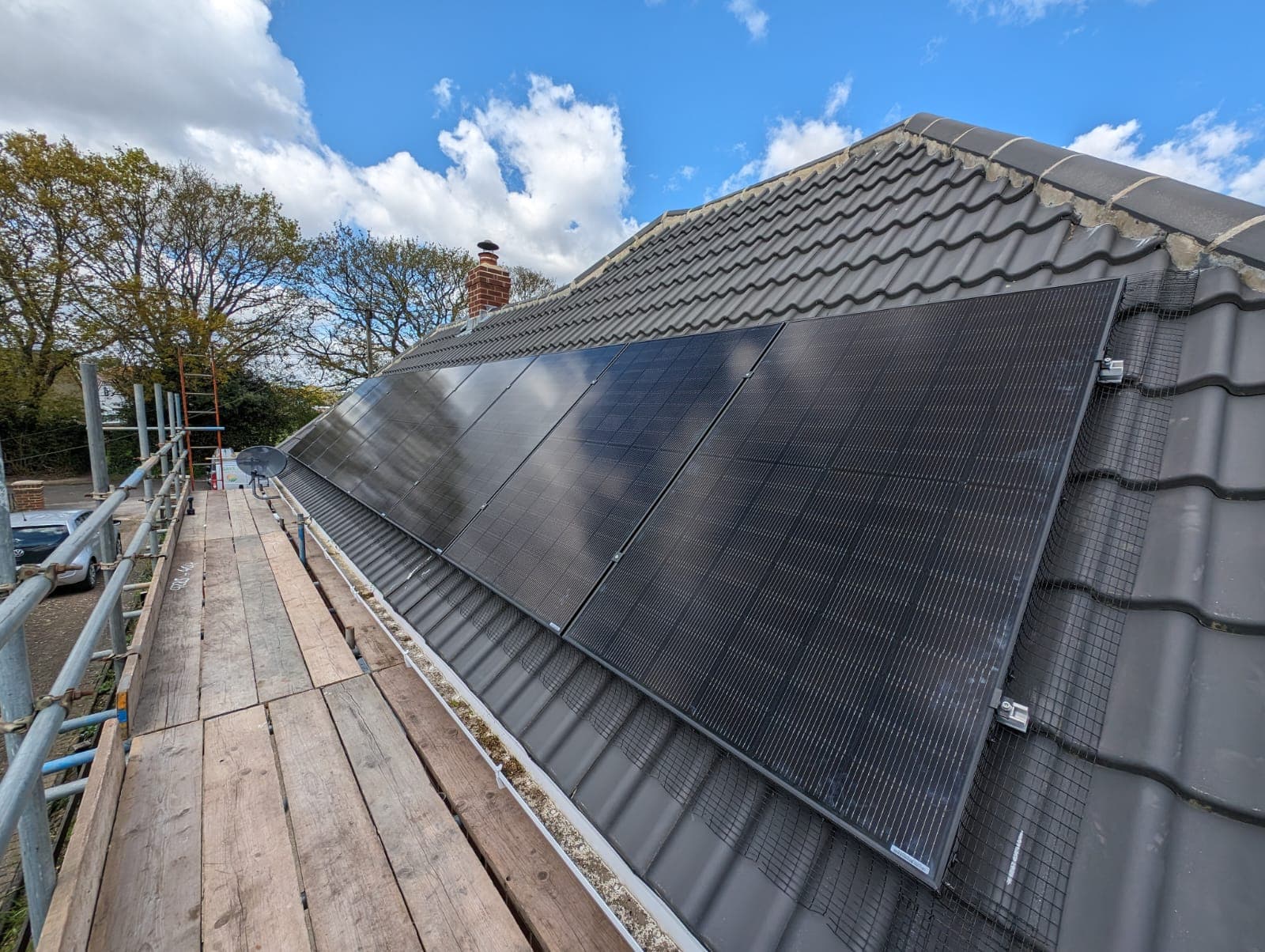
What residential solar looks like here
A bespoke system, sized around what you actually use, never a template quote
Every New Gen system is designed around your real annual electricity usage and tariff, not a one-size template. Most homeowners take a hybrid inverter and battery alongside their panels. It means lower bills straight away, a Smart Export Guarantee payment for what you don't use, and a battery that keeps your evening usage cheap instead of buying it back from the grid at peak rate. Solar and battery storage also adds to your property's value, and gives you a lot more independence, especially useful if you're also running an EV or thinking about one. We handle the DNO application and MCS certificate for you, and advise on the best export tariff, the parts of the process most homeowners find the most confusing.
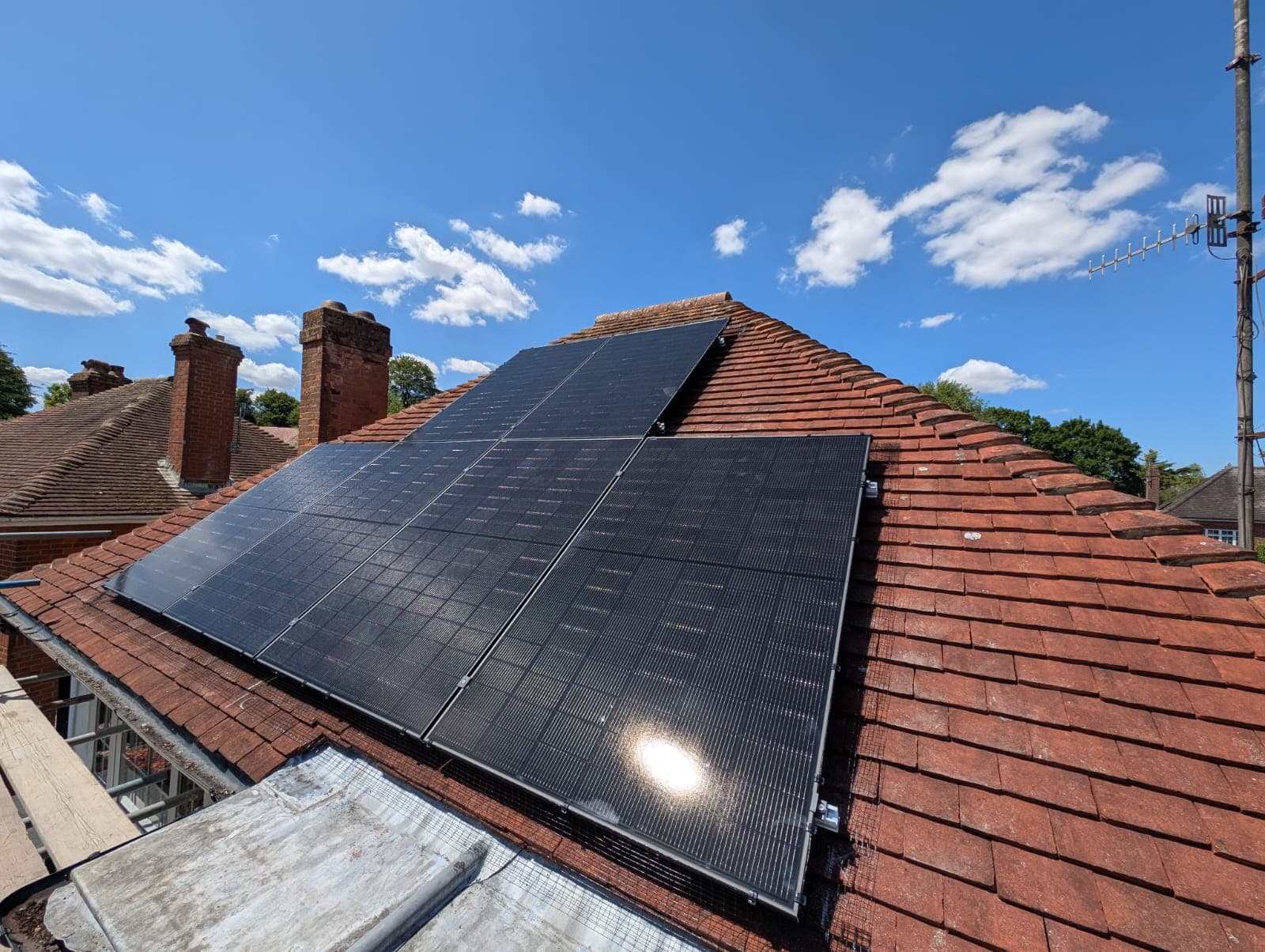
See what you could save, and when it pays for itself
Answer a few quick questions about your home and one of our team will put a savings plan together for you. Worked out properly, by a person.
Most Dorset installs we do pay back in six to eight years, and as low as four to five with sensible oversizing. Your own figures depend on your usage, roof and tariff, which is what the plan works out.
- A payback estimate for your roof and your usage, not a national average
- No automated quote and no pressure at the end of it
- Free, and it takes about two minutes to fill in
What a real system costs
Honest, published pricing, no hiding behind a form
5kW / 10-panel system + 10kWh battery
From £8,825 inc. scaffold
Our most common residential spec
Average residential order (hybrid inverter + battery)
~£10,000
Exact figure confirmed at survey, against your usage
Grants and 0% VAT already apply to most residential solar and battery installs, and the Smart Export Guarantee pays you for what you export. We'll walk you through what applies to your home. See the full breakdown on our grants, SEG and finance guide. One real example: our co-founder Phil saved over £1,600 in his first year, tracked against his own bills, not a projection.
Always compare the warranty, not just the price
| New Gen Renewables | A cut-price fit | |
|---|---|---|
| Workmanship warranty | Insurance-backed (IWA) | Company-backed only |
| Cover if the installer folds | Independent of us | Gone with the company |
| Product selection | Won't fit under a 10-year warranty | Often whatever's cheapest |
| Panel warranty | 25-year product / 30-year performance | Varies, often shorter |
| System sizing | From your real usage | Often a template quote |
| Like-for-like comparison | We'll quote the identical system so you can compare |
What you're buying, and is your roof ready?
Panels, hybrid inverter and battery, fitted honestly, on the roofs it actually suits.
Panels, hybrid inverter & battery
95% of homeowners take a battery alongside their panels, the inverter is predominantly hybrid.
All-black, standard or in-roof
All-black panels as standard, face no more than 15cm above the tiles, with in-roof or SolaSkirt options available.
Most roof types
Concrete tile, peg tile, slate, flat, trapezoidal and corrugated roofs, not thatch. All kit is IP65/IP66 rated and never fitted in the loft.
Honest "sometimes no" advice
We won't recommend north-facing panels, and we're upfront when heavy shade makes a roof unsuitable. A solar carport is considered where the roof isn't viable.
Conservation areas & listed buildings
Experience getting planning granted next to Grade II listed buildings and in Article 4 conservation areas.
How many panels you need
A typical home needs roughly 21m² of usable roof for a 4.5kW system, around 8–10 panels, confirmed exactly at survey.
 01
01Solar Carports
When your roof is not viable: north-facing, shaded, small, listed or in a conservation area.
Learn more 02
02Aiko Solar Panels
Our premium option: built-in shading tolerance and around 23.9% efficiency for a shaded or small roof.
Learn more 03
03DMEGC Solar Panels
Our default value panel: a genuine Tier-1 manufacturer, chosen on warranty, not price.
Learn more
How it works, enquiry to switch-on
Free, no-pressure survey
We look at your roof, usage and tariff, and design a system around it, never a template quote.
Deposit to install
Typically 3–4 weeks from deposit to your install date.
On-site, 3–4 days
Roof and electrical work is typically done in a single day, power is off for a few hours, not longer.
Paperwork handled for you
We manage the DNO application and MCS certificate, and advise on the best export tariff. Nothing left for you to chase.
Ready to see your numbers? Get a free, no-pressure quote.
Or call and ask us anything first, no scripts, no urgency.
Rated 5 stars by Dorset homeowners
Real Google reviews from residential solar and battery installs.
5.0
Adam Khodabaccus
We recently had solar panels and battery storage installed at our property in Poole by New Gen Renewables, and I couldn't be more impressed with the service we received. From the very start, the team were incredibly helpful, knowledgeable, and professional. They took the time to explain everything clearly and made the whole process feel smooth and stress-free. We're already seeing the benefits of going solar.
Ben Harrison
Really good experience with New Gen Renewables from start to finish. Had solar panels fitted and the lads were spot on- turned up on time, worked hard, and got everything done to a high standard. Easy to deal with, no messing about, and explained everything properly without trying to oversell anything.
Neil Smith
Great service from New-Gen! Very personal and very reasonably priced. Had 24 panels installed with inverter and 2 batteries. All working perfectly.
How much does it cost to have solar panels fitted to a house?
A common 5kW / 10-panel system with a 10kWh battery starts from £8,825 including scaffold, the average residential order (with a hybrid inverter and battery) is around £10,000. Your exact figure depends on your roof, usage and tariff, and is confirmed at a free survey, never a hidden number.
Is it worth buying solar panels for your house?
For most Dorset homes, yes, we aim to get every customer's payback under 7 years, with most landing 6–8 years and some as low as 4–5 with sensible oversizing. It's illustrative, never guaranteed, and we'll tell you honestly if your roof or usage doesn't stack up.
How many solar panels do I need for my house?
A typical home needs around 21m² of usable, well-oriented roof space for a 4.5kW system, roughly 8–10 panels. We confirm the exact number at survey, based on your roof and your real usage.
What is the best solar panel for residential use?
We won't fit any panel, inverter or battery with under a 10-year warranty. Our standard residential panels carry a 25-year product and 30-year performance warranty, covering parts, replacement and our labour at no extra cost. Warranty, not brand hype, is the real quality signal.
Are there grants or finance available for solar panels?
Most residential solar and battery installs benefit from 0% VAT, and the Smart Export Guarantee pays you for the power you export. See our dedicated grants, SEG and finance guide for the full breakdown, or ask us at survey. We'll only point you to schemes you actually qualify for.
How disruptive is a solar panel installation?
A typical residential job runs 3–4 weeks from deposit to install, with 3–4 days on site. Roof and electrical work is usually done in a single day, and your power is only off for a few hours.
Do solar panels need cleaning or maintenance?
No, our panels carry a self-cleaning coating, so routine cleaning isn't needed. We don't offer cleaning or maintenance-plan add-ons because there's genuinely nothing to sell you.
What if the installer goes out of business after my install?
Our workmanship warranty is insurance-backed (IWA), so your cover doesn't disappear if we ever went under. We'll also quote you the identical system a rival has proposed so you can compare like-for-like, not spec-for-spin.
Get a free, no-pressure quote, or just call and ask
Honest, technically-led advice and a system designed around what you actually use.