
Commercial Rooftop Solar Guide for Businesses
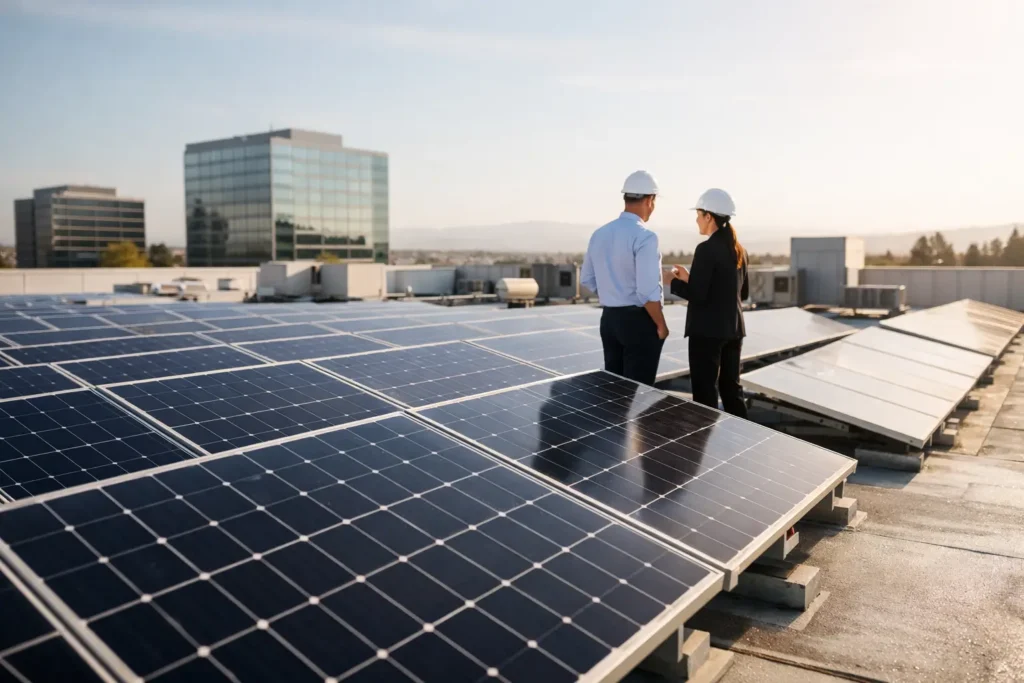
If your electricity bill has become one of those costs that keeps rising without adding any real value to the business, solar starts to look less like a nice idea and more like a practical fix. This commercial rooftop solar guide is written for business owners and property decision-makers who want clear answers on cost, savings, suitability and what the process actually looks like before committing.
For many commercial sites, the biggest advantage is simple – you are using power during the day, which is when solar panels are generating most of it. That makes rooftop solar a strong fit for offices, warehouses, workshops, farms, schools, retail units and mixed-use commercial buildings. When the system is well designed, the energy you generate is used on site first, reducing the amount you need to buy from the grid at higher daytime rates.
Who this commercial rooftop solar guide is for
Commercial solar is not just for large industrial estates or multi-site operators. Many small and medium-sized businesses can make a sound case for it, especially if they have a consistent daytime load, rising overheads and roof space that is currently doing very little.
The right project usually starts with a few basics. You need a roof in reasonable condition, enough usable area, and an electricity profile that lines up with solar generation. If your business is busiest from morning to late afternoon, the numbers are often stronger than people expect. If most of your usage happens overnight, the answer may still be yes, but battery storage or a different system size could matter more.
Ownership also matters. If you own the building, decisions are usually more straightforward. If you lease it, solar can still be possible, but the landlord relationship, roof rights and lease length need to be checked early rather than halfway through the process.
What makes a commercial roof suitable
Not every roof is equal, and good installers will say that plainly. A large roof does not automatically mean a better project. What matters is usable space, structural suitability and how much of the generated power your business can actually use.
Pitch, orientation and shading all affect output. South-facing roofs often get the headline attention, but east-west systems can work very well on commercial properties because they spread generation across more of the working day. That can suit businesses better than a sharp midday peak.
The roof covering itself also needs attention. Metal sheet roofs can be very solar-friendly. Flat roofs can work well too, provided the system is designed with the correct mounting, spacing and wind loading in mind. Older roofs may still be suitable, but if repairs or replacement are likely within a few years, it is usually better to address that before panels go on.
Structural review is one of the most important parts of commercial design. Panels and mounting systems add weight, and wind uplift has to be considered properly. This is not an area for guesswork or rushed quoting.
How the savings really work
The main saving comes from self-consumption. Every unit of solar electricity your business uses on site is one less unit bought from your supplier. That is usually where the best return sits.
There may also be income or credit for exported electricity, but export payments alone rarely justify a project. The strongest commercial systems are designed around reducing imported energy first, then making sensible use of excess generation.
This is why half-empty promises about payback can be misleading. A bigger system is not always a better system. If it generates far more than you can use during the day, the extra panels may deliver a weaker return than a slightly smaller array tailored to your actual demand. Good design is about matching generation to consumption, not just filling the roof because the space exists.
In practical terms, the variables that shape return on investment include your current electricity tariff, half-hourly usage profile, roof layout, system size, available export rates and whether battery storage is included. Finance can change the picture too. Some businesses prefer to preserve cash and spread the cost if monthly repayments are close to or below the energy savings.
Battery storage – useful, but not always essential
Battery storage is often discussed as if every solar project needs it. That is not always true. For many commercial sites, solar alone can already make a strong case if daytime demand is high enough.
Batteries become more attractive when your site has late afternoon or evening usage, demand spikes that need smoothing, or regular periods where solar generation would otherwise be exported cheaply. They can also help where resilience matters, although backup capability depends on the system design and not every battery setup provides the same level of continuity.
The trade-off is cost. Adding battery storage increases capital spend and can lengthen payback if it is not solving a real operational problem. The right question is not whether batteries are good. It is whether they improve the overall business case for your site.
Planning, permissions and compliance
One reason businesses delay solar is the fear that approvals will be confusing. Sometimes they are straightforward, and sometimes they need a more careful route.
Planning requirements depend on the building and location. Many rooftop systems fall within permitted development, but there are exceptions, particularly for listed buildings, conservation areas or sites with unusual roof configurations. Grid connection approval also has to be handled properly, especially for larger systems.
Compliance should never be treated as a box-ticking exercise. Commercial solar needs to be designed and installed to current standards, with proper electrical protection, safe access considerations and clear documentation. For UK businesses, working with an MCS-compliant installer gives reassurance that design, equipment and installation standards are being met in a structured way.
If your business is based in Dorset or Hampshire, local knowledge can also help. Roof types, planning sensitivities and distribution network expectations can vary enough that experience in the region adds real value.
What a good proposal should include
A proper commercial solar proposal should answer business questions, not bury them under jargon. If a quote looks cheap but gives you little confidence in how the system was designed, that is a warning sign.
You should expect to see projected annual generation, estimated self-consumption, likely savings, equipment details, warranty information, assumptions used in the forecast and a clear outline of installation scope. If battery storage is included, the proposal should explain why it is being recommended and what benefit it is expected to provide.
It is also worth looking at what is missing. Does the installer mention structural review? Roof access? Grid application? Monitoring? Aftercare? Commercial clients are right to be cautious when proposals focus heavily on headline savings and lightly on delivery details.
At New Gen Renewables, that clarity matters because businesses are not buying panels alone. They are investing in an asset that needs to perform reliably for years.
Installation and what to expect on site
Commercial clients often worry less about whether solar works and more about whether installation will disrupt operations. That is a fair concern.
A well-managed project should be planned around your site. Access times, health and safety, delivery arrangements, electrical shutdowns and phased works all need to be discussed in advance. For some sites, installation is relatively low-disruption. For others, especially where switchgear changes or coordination with ongoing operations is needed, careful sequencing makes all the difference.
Monitoring is another part of the picture. Once the system is live, you should be able to see what it is generating and whether performance matches expectations. That visibility helps with both energy management and peace of mind.
Common mistakes businesses can avoid
One common mistake is buying on price alone. Commercial solar is a long-term investment, and poor design or weak installation standards can be expensive to fix later.
Another is treating solar as a generic product. Two buildings with the same roof area can produce very different returns depending on usage profile, shading, export limits and operational hours. There is no sensible shortcut around site-specific design.
A third is ignoring future plans. If your business is adding EV chargers, expanding machinery, changing occupancy patterns or planning a roof refurbishment, that should shape the system design now. Solar works best when it is planned as part of the building’s wider energy strategy rather than squeezed in as an afterthought.
Is now the right time?
For many businesses, waiting has a cost. Every month without on-site generation is another month of buying all your daytime electricity from the grid. That does not mean every roof should have solar immediately, but it does mean a proper assessment is worth doing sooner rather than later.
The strongest commercial projects are rarely the ones sold with the biggest claims. They are the ones designed carefully, quoted clearly and installed by a team that treats performance, safety and aftercare as part of the same job. If your roof is suitable and your daytime demand is strong, commercial solar can move from a future consideration to a practical business improvement with measurable value.
The best next step is not to chase the biggest system or the cheapest quote. It is to get clear numbers on your building, your usage and your options, then make the decision with confidence.