
How to Choose the Best Commercial Solar Installers
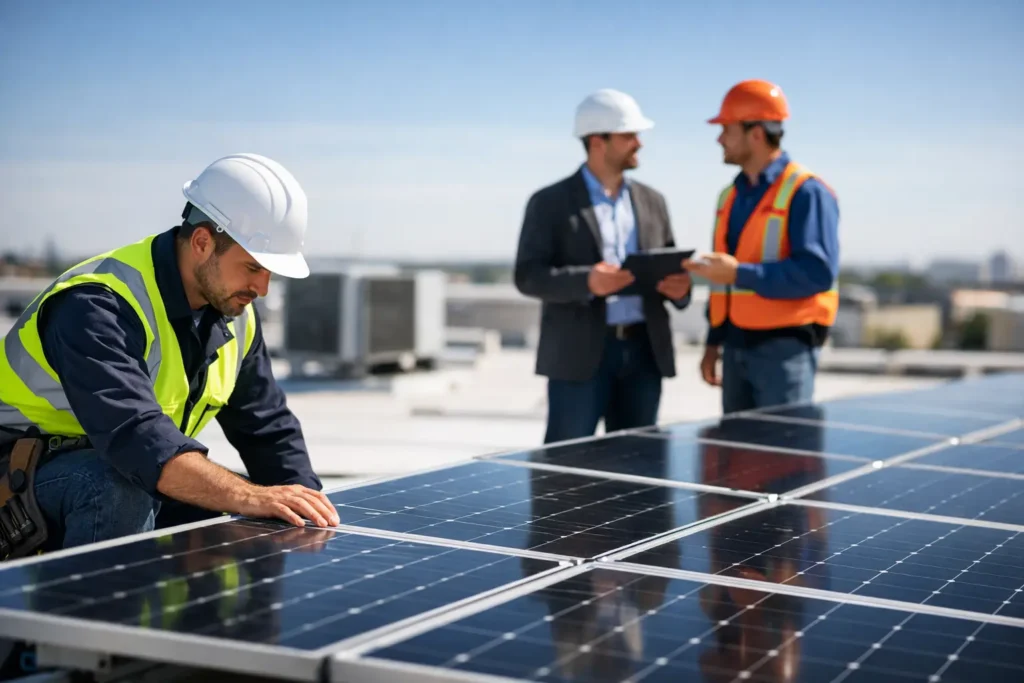
A commercial solar proposal can look convincing on paper and still turn into an expensive headache once work starts. That is why choosing the best commercial solar installers is not really about finding the cheapest quote. It is about finding a partner who can design the right system, install it properly, and support it long after the panels are switched on.
For business owners, the stakes are higher than they are on a typical domestic job. A poor installation can affect trading, cash flow, building safety, compliance, and long-term return on investment. If you are comparing providers, it helps to know what separates a reliable installer from a sales-led operation.
What the best commercial solar installers do differently
The strongest commercial installers do more than sell panels. They start by understanding how your site actually uses electricity. That means looking at daytime demand, seasonal variation, available roof space, export potential, future growth, and whether battery storage would improve the economics.
A weaker provider may push a standard package because it is easier to price and quicker to sell. A better one will explain why one system size makes more sense than another, even if that means a more measured recommendation. For some businesses, maximising generation is the right move. For others, a smaller, better-matched system delivers a stronger payback because less energy is exported at a lower rate.
Good installers are also realistic. They will talk openly about roof condition, structural constraints, cable runs, grid limitations, and any disruption to operations. If a provider glosses over those points early on, problems usually appear later when they are harder and more expensive to fix.
Look past the sales pitch
Commercial solar can attract companies that are good at marketing but less dependable when it comes to delivery. That does not always show up in the quote. In fact, polished proposals can sometimes hide vague assumptions, outsourced labour, or optimistic generation figures.
Ask who will actually carry out the survey, design, installation, and commissioning. If most of the process is handed from one subcontractor to another, accountability can become blurred. When questions arise, businesses often find themselves caught between separate parties, each responsible for only part of the job.
An installer with genuine in-house capability usually offers more consistency. The design team understands the installation realities, and the people on site are working to a plan that has been properly thought through. That tends to produce fewer delays, clearer communication, and a better-finished system.
How to compare commercial solar quotes properly
Price matters, but it only tells part of the story. Two quotes that look similar at the top line can differ significantly in system quality, projected performance, warranties, and aftercare.
Start with the design assumptions. Is the proposed system based on your actual energy profile, or just your roof size? Has shading been considered? Are the generation estimates sensible for your site and orientation? If projected savings seem unusually high, ask how they were calculated.
Then look at the equipment. Panel and inverter choice should reflect your building and operating needs, not just the installer’s preferred stock. A warehouse, office, farm building, retail unit, and industrial premises can all call for different design decisions.
Finally, examine what is included. Some quotes leave out scaffolding, monitoring, grid application work, bird protection, or electrical upgrades that later appear as extras. A transparent quote is not always the lowest one, but it is usually easier to trust.
The best commercial solar installers explain payback honestly
Payback is one of the first questions any business asks, and rightly so. But it should never be reduced to a single headline figure without context.
A credible installer will talk through the variables that shape return on investment. These include your self-consumption rate, electricity tariff, export arrangement, financing method, maintenance expectations, and whether your energy demand is likely to change. If your business mainly operates during daylight hours, the case for solar is often stronger because more generation is used on site. If usage is lighter during the day, battery storage may deserve a closer look.
There is also a difference between a fast quote and a useful one. A rough estimate can be helpful at the start, but serious decisions need more than broad assumptions. Businesses should expect clear forecasting, sensible caveats, and a willingness to answer difficult questions without pressure.
Compliance and workmanship are not small details
When you are investing in a commercial system, installation standards matter just as much as the hardware. A well-designed system can still underperform if it is installed badly or commissioned without care.
This is where certifications, electrical competence, and process discipline become important. Commercial properties often involve more complex access arrangements, larger distribution setups, and tighter coordination with site operations. The installer should be comfortable working within those conditions rather than treating the job like an oversized domestic system.
You should also expect clarity on warranties and ongoing support. Product warranties are one thing, but workmanship backing and aftercare are just as important. If there is a fault, you need to know who to call and what happens next. That reassurance matters even more for businesses where downtime has a direct cost.
Why local knowledge can make a real difference
For many businesses, a local installer is not simply a nice-to-have. It can improve responsiveness, accountability, and understanding of the area network conditions. That is especially relevant when access, planning considerations, or grid constraints need careful handling.
A provider working regularly across Dorset and Hampshire, for example, is more likely to understand the practical issues that affect regional projects, from site logistics to the pace of local approvals. More importantly, a local reputation is easier to check. Businesses that rely on trust in their own sector tend to value that in their contractors too.
This does not mean every national firm is the wrong choice. Some are well organised and technically strong. But if a business wants straightforward communication and long-term support, a local specialist often has the edge.
Questions worth asking before you appoint anyone
A good commercial solar installer should be comfortable with scrutiny. If direct questions are met with vague answers, that is useful information in itself.
Ask how the system has been sized and what assumptions sit behind the savings forecast. Ask whether installation is handled in house or subcontracted. Ask what happens if your roof needs remedial work, or if the grid connection process takes longer than expected. Ask who provides aftercare and how faults are managed.
It is also worth asking how disruption will be minimised. For many SMEs, installation needs to fit around trading hours, staff access, deliveries, or tenant requirements. The technical solution matters, but so does the installer’s ability to run a tidy, well-planned project.
Red flags to watch for
The biggest warning signs are usually visible early. One is pressure selling, especially where discounts are tied to immediate decisions. Commercial solar should be assessed carefully, not rushed through because a salesperson wants a signature.
Another is vague pricing. If the quote lacks detail, or key elements are brushed off as things to sort later, expect the final cost to move. Overstated generation forecasts are another concern. If one provider promises much stronger returns than several others, there should be a clear technical reason.
Be cautious too if the conversation focuses heavily on hardware brands but lightly on design, installation method, and support. Good equipment matters, but the outcome depends on the whole system and the team behind it.
Choosing confidence, not just capacity
When businesses compare solar installers, they often start by looking at system size, savings, and price. Those are all sensible starting points. But the better question is whether the installer gives you confidence in the full process, from survey to design to aftercare.
That confidence usually comes from clear advice, transparent quoting, realistic forecasting, and evidence that the company knows how to deliver commercial projects properly. It also comes from honesty. Sometimes the right installer is the one who points out a limitation, challenges an assumption, or recommends a different approach because it will serve the business better over time.
For companies that want lower energy costs without unnecessary risk, that kind of straightforward expertise is worth far more than a polished sales pitch. If you are choosing between providers, look for the team that treats your project like a long-term investment rather than a quick transaction. You will usually feel the difference from the first conversation.