
Can Solar Panels Run a Whole House?
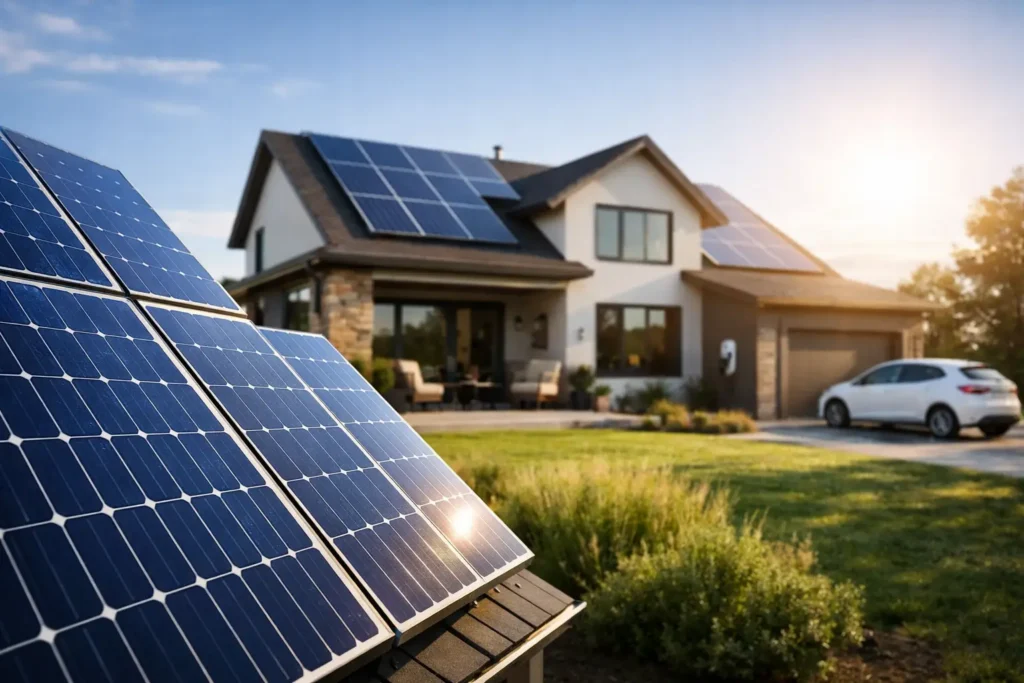
A lot of homeowners ask this after opening a higher-than-expected electricity bill or thinking about future energy costs: can solar panels run a whole house? The honest answer is yes, they can – but not in every property, not in the same way, and not without the right system design.
This is where solar often gets oversimplified. A sales pitch might suggest that a roof full of panels will cover everything, all year round. Real life is a bit more nuanced. Whether solar can power your entire home depends on how much electricity you use, when you use it, how suitable your roof is, and whether battery storage is part of the plan.
What it really means to run a whole house on solar
For some households, running a whole house on solar means generating enough electricity over the course of a year to match annual usage. For others, it means being able to power the home directly from solar during the day and rely far less on the grid. For a smaller number, it means aiming for near energy independence with solar and battery storage working together.
Those are three very different goals.
If your home uses 3,500 kWh per year and your solar system produces roughly the same amount annually, that is one version of a whole-house solar setup. But that does not mean your house is powered entirely by solar every hour of every day. Solar generation peaks during daylight hours, while many households use most of their electricity in the morning and evening. That gap matters.
Can solar panels run a whole house in the UK?
Yes, in many cases they can cover most or all of a home’s annual electricity demand. In the UK, though, the key challenge is timing rather than total generation.
On a bright summer day, a well-sized system may produce more electricity than your home needs. On a dark winter afternoon, the same property may import power from the grid because solar output is much lower. That is why the question is less about whether panels can power a whole home in theory and more about how often they can do it in practice.
A typical domestic solar system in the UK might range from around 3.5 kWp to 6 kWp, depending on roof space and household demand. A larger system on a well-positioned roof can generate a substantial share of annual electricity use. Add battery storage, and more of that power can be used in the home rather than exported.
The biggest factor is how much electricity your home uses
Before anyone can answer this properly, they need to understand your consumption. A smaller household with petrol heating and average appliance use will need far less electricity than a larger home with an EV charger, heat pump, electric shower, tumble dryer and people at home during the day.
Two houses on the same street can have completely different requirements.
If your annual usage is modest, a standard roof-mounted solar system may go a long way towards covering it. If your usage is high, solar can still make a major difference, but you may need a larger array, battery storage, or a realistic expectation that the grid will remain part of the picture.
This is why tailored design matters. The right starting point is not the number of panels your neighbour installed. It is your actual energy profile.
Roof size, orientation and shading all affect the answer
Even if your electricity use is ideal for solar, the roof has to support the system.
South-facing roofs usually offer the highest generation, but east and west-facing roofs can still perform very well, especially if your usage is spread across the day. A split east-west system can sometimes suit household demand better than a purely south-facing one because it generates across a longer period.
Shading is another major factor. Chimneys, trees and nearby buildings can reduce output, sometimes significantly. Roof shape and usable area also matter. If there is not enough space for the number of panels required, then covering all of your electricity demand becomes less likely.
That does not mean solar is not worth doing. It simply means the design should be based on what your property can sensibly achieve rather than a generic promise.
Why battery storage changes the conversation
If you are asking can solar panels run a whole house, battery storage is usually part of the real answer.
Without a battery, solar power generated in the middle of the day is used first in the home, and any surplus is typically exported. Then, when the sun goes down and household demand rises, you import electricity from the grid again.
With a battery, excess daytime generation can be stored for use later in the evening. That improves self-consumption and helps your home rely more on the electricity it has generated. It does not create extra solar power, but it allows you to use more of what you already produce.
For many homeowners, the difference between a system that offsets bills and a system that feels genuinely transformative is the battery.
Battery storage is especially useful if you are out during the day, have an EV to charge, or want more resilience against rising energy prices. It can also make a lot of sense alongside time-of-use tariffs, where cheaper off-peak electricity can be stored when needed.
What appliances can solar run?
A correctly designed system can run the same household appliances you already use – lighting, refrigeration, televisions, washing machines, kettles, computers and more. Solar does not power only certain circuits unless a specific backup setup has been designed that way. It feeds into your home’s electrical system.
The issue is not whether solar can run these appliances. It is whether enough generation is available at that moment.
High-demand items such as electric ovens, immersion heaters, heat pumps and EV chargers can use a large amount of electricity quickly. If several are running at once, your home may still draw from the grid even with a healthy solar array. That is completely normal.
A well-planned system looks at these peaks and patterns rather than assuming average usage tells the whole story.
Off-grid is different from bill reduction
Some people asking whether solar can run a whole house are really asking if they can live off-grid. That is a different level of system design.
An off-grid setup usually requires a larger solar array, substantial battery capacity and often backup generation for periods of low winter production. In the UK climate, achieving reliable off-grid living year-round takes careful planning and a willingness to invest in storage and energy management.
For most grid-connected homes, the more practical goal is to reduce reliance on imported electricity as much as possible while keeping the grid as a backup. That tends to offer a better balance of cost, resilience and return on investment.
The financial side matters too
Even if a roof could technically support enough panels to match annual usage, that does not always mean it is the most sensible design. Budget, payback period and expected savings all come into play.
Sometimes the best-value system is not the absolute largest one. In other cases, especially where electricity use is high, a larger system with battery storage delivers stronger long-term returns. There is no single formula that suits every property.
This is one reason homeowners often get frustrated when quotes are vague or overly sales-led. You need clear generation estimates, realistic savings projections and an explanation of what the system will and will not do.
For households across Dorset and Hampshire, local factors such as roof type, shading and usage patterns can have as much impact as the equipment itself. Good advice should reflect that.
So, can solar panels run a whole house?
Yes – if the system is designed around the home rather than sold as a one-size-fits-all package.
For some properties, solar can cover most or all annual electricity use. For others, it can still cut bills significantly without fully replacing grid imports. Add battery storage, and the system becomes far more effective at supporting the whole home beyond daylight hours.
The right question is not just can solar panels run a whole house, but what would it take for them to run yours well.
That starts with honest numbers: how much you use, what your roof can support, and how you want the system to perform over time. When those pieces are assessed properly, solar stops being a vague idea and becomes a practical home improvement with a clear job to do.
If you are considering solar, the most useful next step is not chasing the biggest system on paper. It is getting a design that fits your property, your usage and your priorities – because that is where real confidence in the investment comes from.